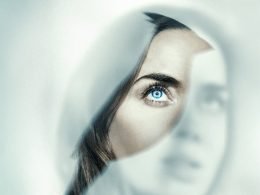





Closing your eyes won’t help you this time. In the much-anticipated A24 film Undertone, horror unfolds in high-fidelity, tunnelling its spindly claws deep into your ear canals and tugging at your brain. Across 90 tension-packed minutes, the terrifying feature transforms a quiet suburban setting into a theatre of fear, anxiety and dread using little more than soundscapes and audio cues. Make no mistake, Undertone is unlike any horror movie you’ve ever seen, or heard, before.
But for filmmaker Ian Tuason, Undertone is a story he’s lived for the past six years.
”Everything had to be true,” Ian tells me. ”If I was writing something and my intention behind it was not to tell the truth, but to say, sound cool or sound scary, it wouldn’t work. My intention was never to sound scary. My intention was to scare people, but in order to scare them, I would have to make a very good movie. And the only way I could have done that was if I just told the truth.”
Understanding Undertone
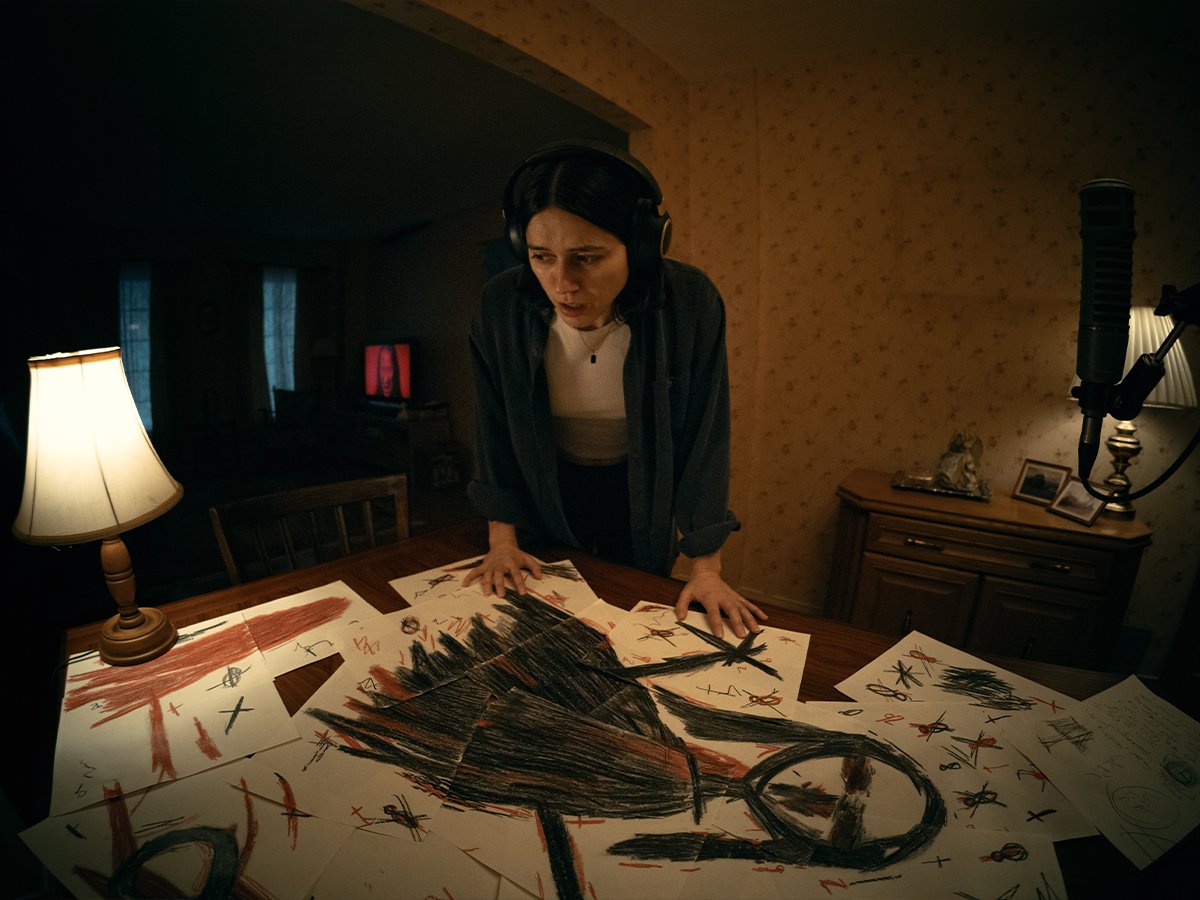
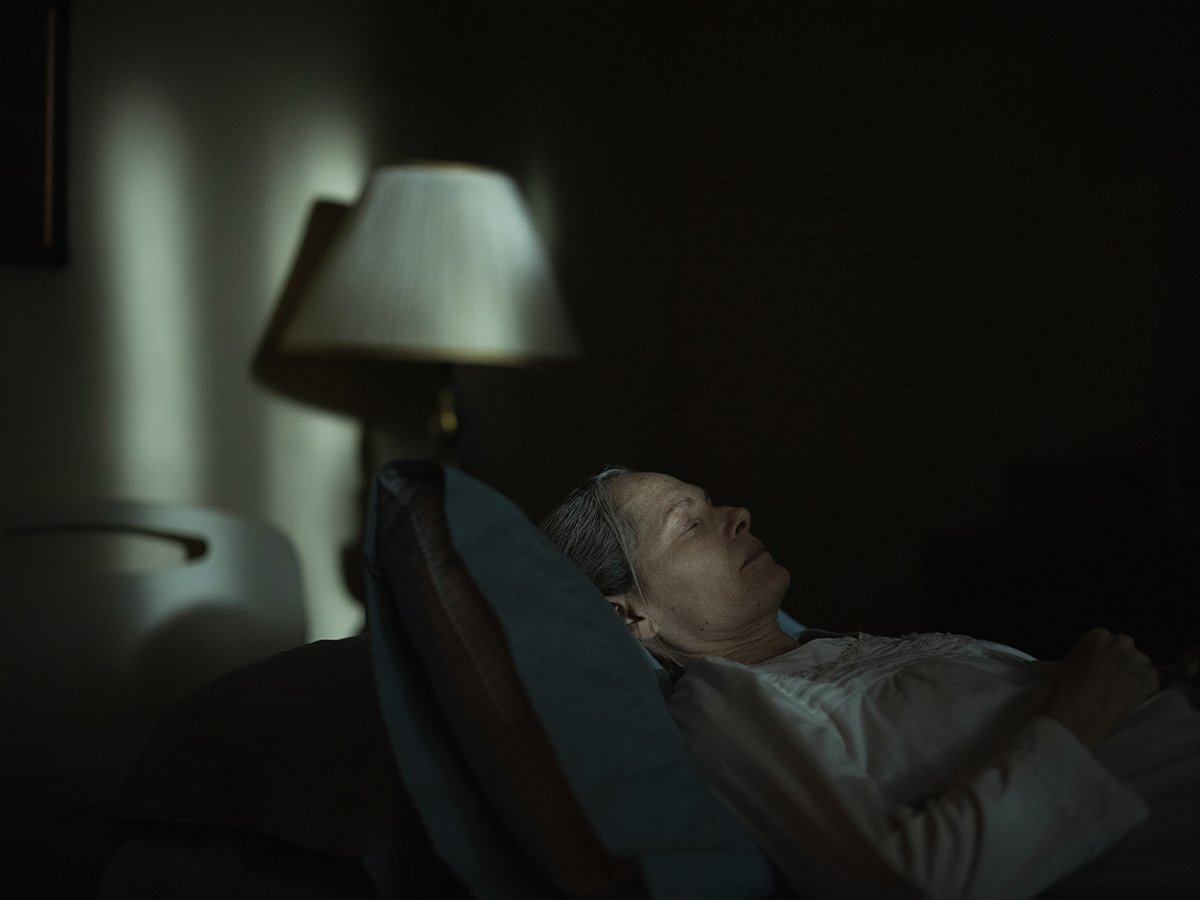
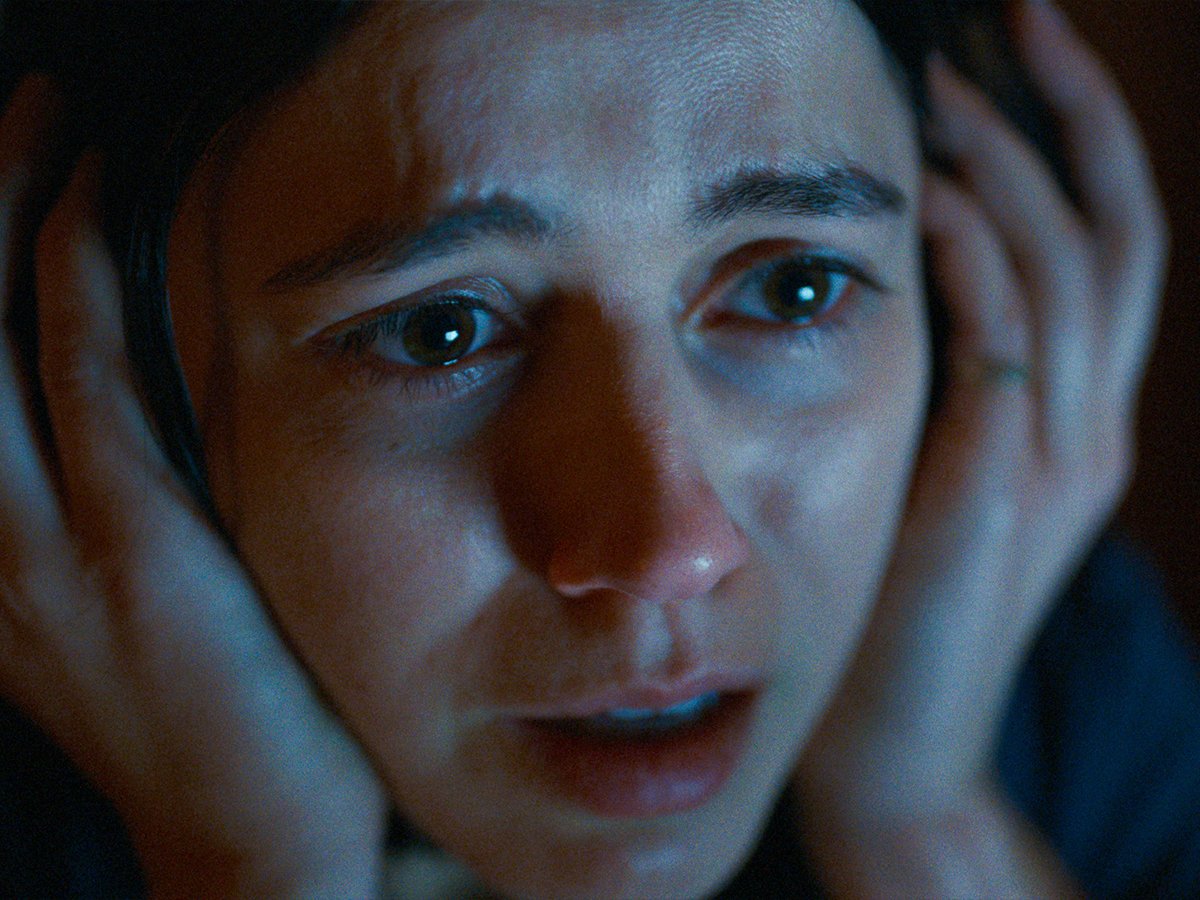
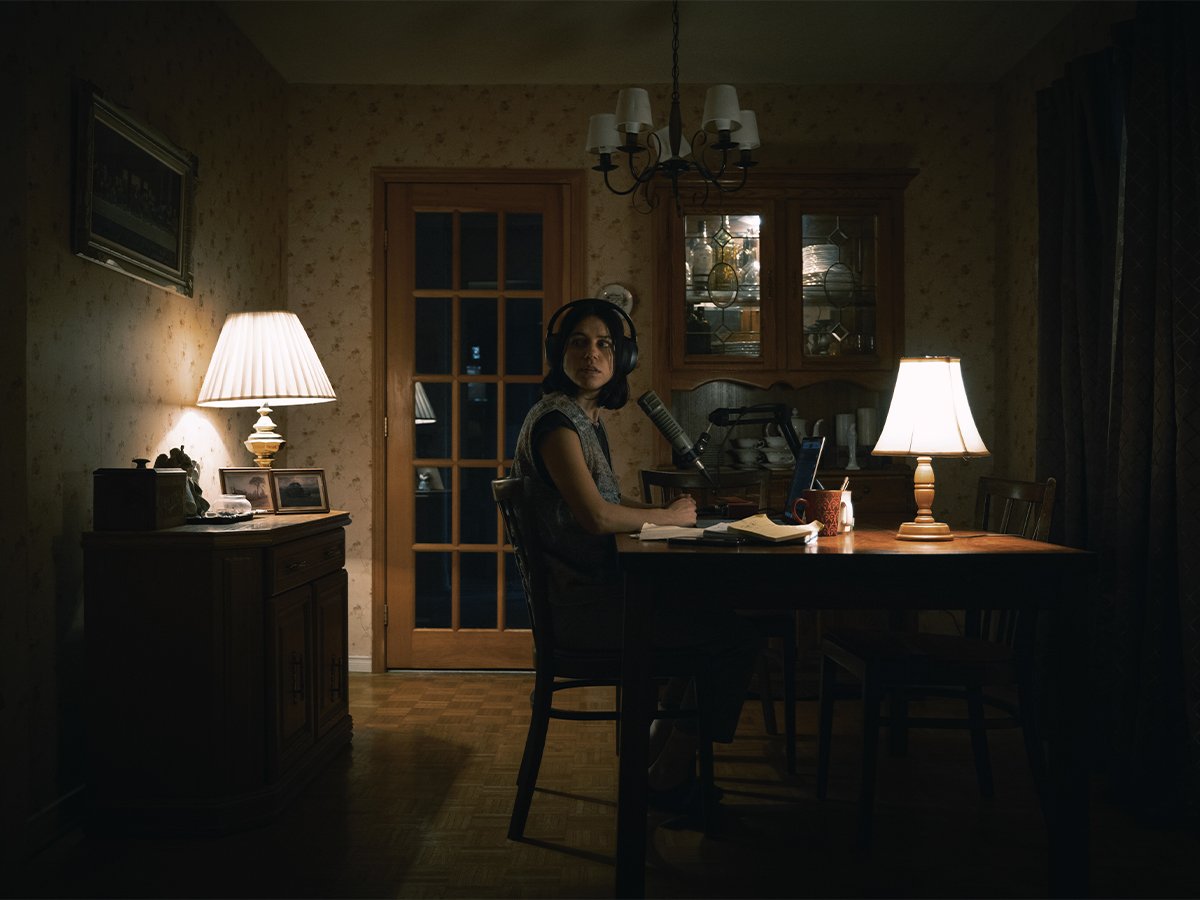
The film centres around Evy (Nina Kiri), a young paranormal mysteries podcaster who returns to her childhood home to care for her terminally ill mother. Trapped in the eerie shadow of her mother’s looming death, Evy’s nightly phone calls and recording sessions with podcast co-host Justin are her only respite, however, when the pair are sent a series of spooky recordings without any context, the two worlds become one.
As she dives deeper into the tapes, Evy’s reality begins to warp and twist. Memories of a past she doesn’t recall come back to haunt her, the effigy of her lurching mother sparks new fears and the discovery of an ancient curse looms heavy overhead, blurring the line between reality and delusion. With each recording, Evy becomes increasingly aware that her life and the lives of the two beleaguered characters that she hears in her headphones might be more intertwined than she could have ever imagined.
The Sound of Fear
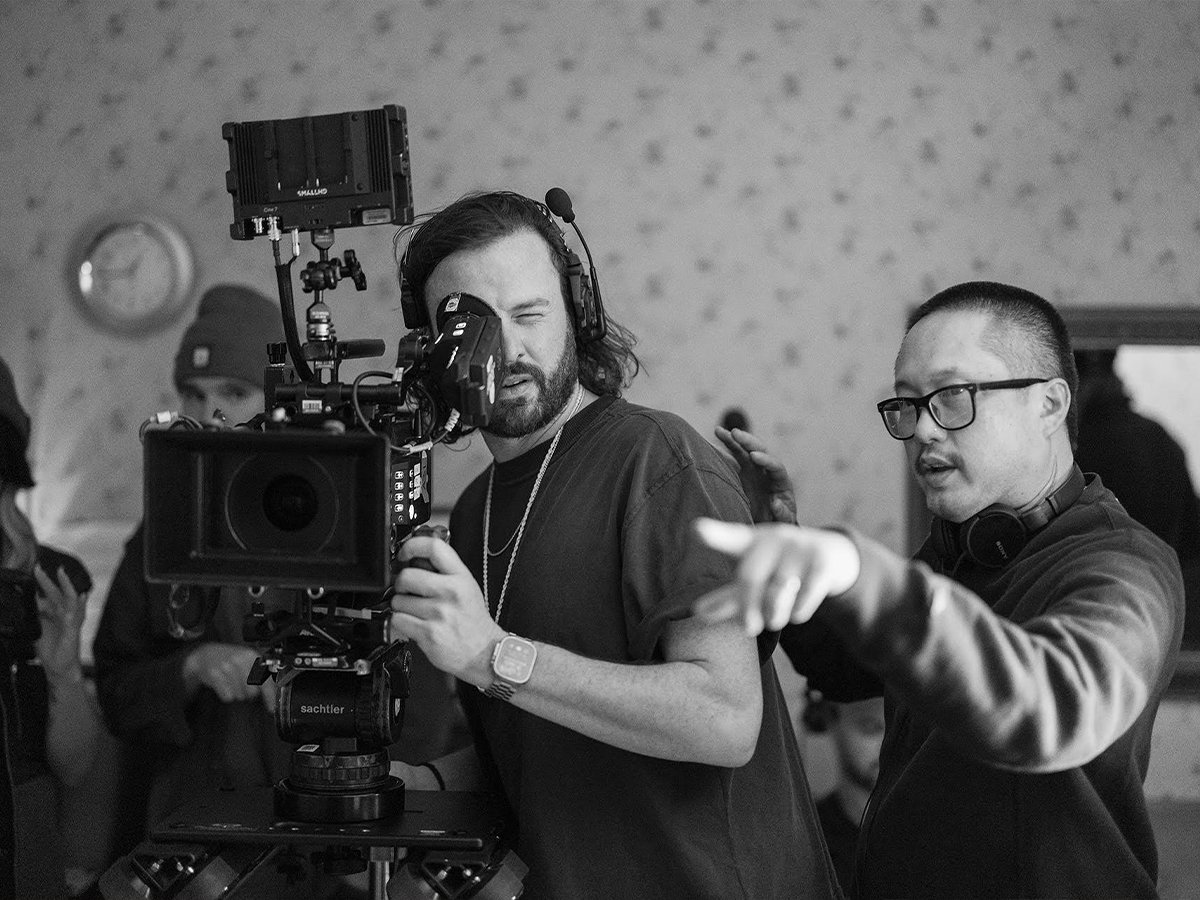
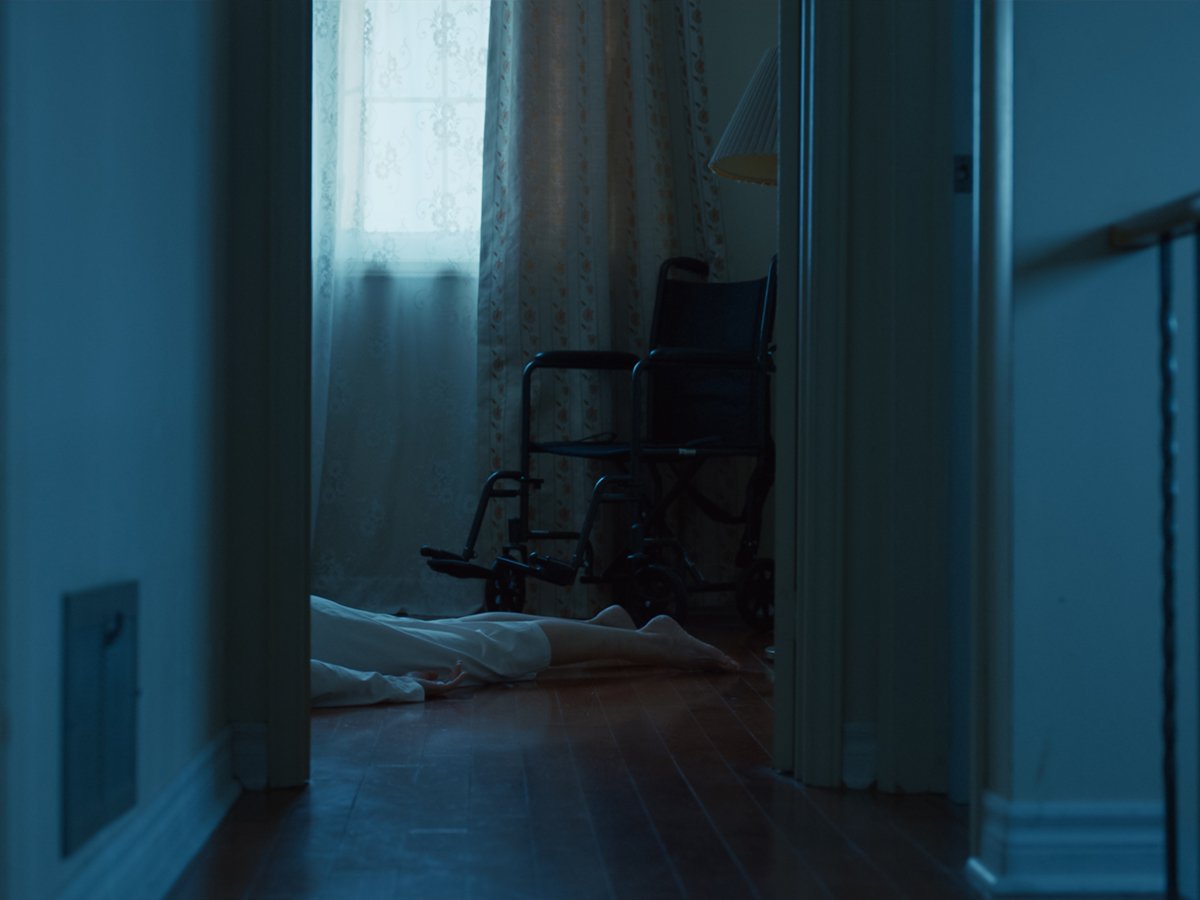
Undertone is the very definition of a minimalist horror. A film set in one location with only one on-screen talking role, the movie strips away the immaterial and leaves only the essential intact. There are no intricate CGI scenes, no celebrity cameos or fake Hollywood polish; Undertone paints a bleak picture using the audience’s imagination as the brush. In many ways, it feels like the purist’s form of cinema; a vintage approach reminiscent of William Friedkin’s The Exorcist, emboldened with the DIY attitude of The Blair Witch Project. As director/writer Ian Tuason tells me, that wasn’t by accident.
”I watched a lot of paranormal movies like Hereditary, The Babadook, The Exorcist, just to add that cinematic feel to the scenes where we’re not in the podcast world,” Ian tells me. ”The audio soundscape was heavily influenced by my experience making virtual reality experiences, so I had to design sound in a 360 environment.”
The result is truly incredible. The soundscapes paint a vivid, hallucinatory image of dread and horror, harking back to the two-note terror that Steven Spielberg captured in Jaws. Part of the film’s magic is in its consistent subversion of the formulaic practices of conventional horror entertainment.
Undertone doesn’t rely on jump-scares or cheap tricks to cheat the audience into feeling fear. It does it through rich negative space, a constricted point-of-view and spatial 3D audio design that drops you directly inside a setting that feels both claustrophobic and isolating. The filmmaker also consciously removed many of the visual components, meaning you have to imagine the horror rather than have it spelled out to you. There are even audio cues that feel familiar, yet distorted such as children’s lullabies and human voices, adding to the emotional distress.
”It’s funny because we’re juxtaposing silence and sound, but we’re also juxtaposing ancient demons and new technology. I’m jumping back and forth, and I guess that’s the fun of it. It moves to a point where we’re listening to things in reverse and now we’re thinking, ”Is this new or is this ancient? What is it?’” he says. ”With Paranormal Activity and The Blair Witch Project…people don’t think of those films as audio driven, but to me they’re completely audio driven. You don’t see anything in these movies. Even the lo-fi texture of it adds to that realism. Undertone uses those found audio recordings, which I recorded on an iPhone in my house, to capture that texture.”
Truth in Cinema
In many ways, the film mirrors Ian Tuason’s own life. Six years ago, the Canadian filmmaker returned to his childhood home in Toronto after both his parents were diagnosed with terminal cancer. Putting his life on hold, Ian became a full-time carer for the both of them, spending his days tending to their needs and his nights, penning the script for what would ultimately become Undertone.
When his parents both passed, Ian was left with the family home and small inheritance. Remarkably, he used both to create Undertone. Not only did the Canadian filmmaker use his inheritance to fund the initial production of the movie, he shot the entire thing in his family home.
”By then, I’d gone through so much stress that nothing scared me. I wasn’t scared of anything,” he tells me. ”For two and a half years, I was writing this film, drawing from personal experience. I was sitting in my house, looking at different rooms and remembering certain things that scared me as a kid, like the staircase. I remember being a kid and turning off the lights downstairs and running upstairs to jump into my bed and go under the covers. I was just taking photos around the house, copying, pasting the photos directly onto the screenplay.”
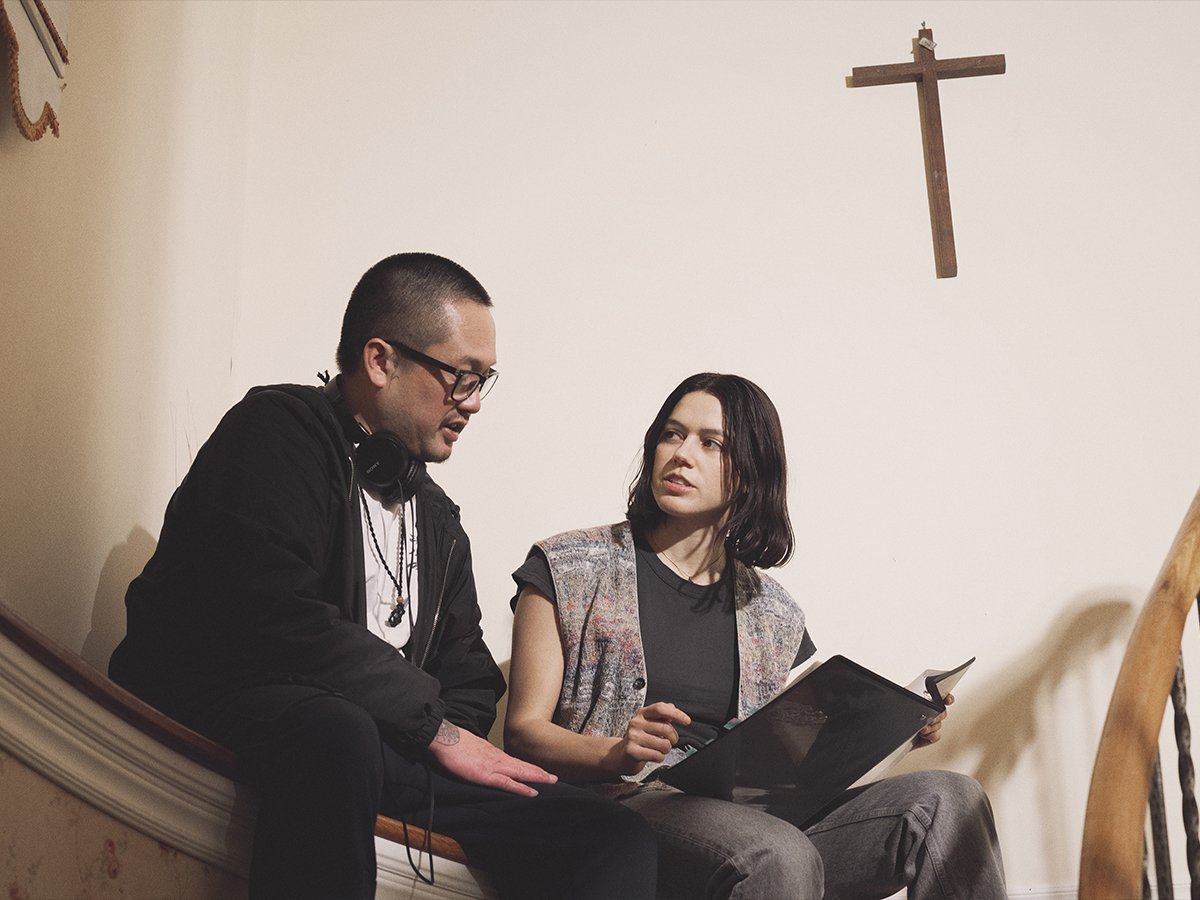
The grief of losing both his parents, Ian explains, gave him a new perspective. Suddenly, Undertone had shifted from being a film project to a way for him to process the situation. Even a dream meeting with A24, the studio behind Marty Supreme, Everything Everywhere All at Once and Hereditary, felt different.
”Once we sold to A24, my managers flew me out to Hollywood to meet all these execs of my favourite movies,” Ian says. ”I just remember I was there with my two producers, Dan Slater and Cody Calahan, and they were just starstruck, and I was just like, ”I don’t give a shit. I just saw my parents die”.”
”I just realised that no one really matters except for the people that actually matter.”
For what it’s worth, A24 loved the film, but it was what happened after that made Ian realise the story wasn’t done yet. The horror filmmaker, whose work largely focuses on the supernatural, started to sense a presence, an unexplained feeling that followed him across the project.
”After that, I started slowly feeling the presence in the things that were happening to me,” Ian explains. ”Even the fact that it sold, like all my dreams coming true, was pretty clear to me that I was experiencing karma for doing something that was really hard to do, but it was the right thing to do. Now I’m at a place where I can leave all that behind and I just try and enjoy what’s happening.”
21st Century Horror
While much of the film’s plot is taken directly from Ian’s own life, Undertone was also largely influenced by internet forum ‘creepypastas’ and the old paranormal TV shows. In fact, he ended up borrowing one of Undertone‘s most important lines directly from a real-life supernatural series.
”If you look it up, there’s a haunted Toys R Us somewhere in California,” he tells me. ”There was some mystery show in the ‘90s that showed security camera footage of toys falling off the shelves at night, and then they would play the audio that the cameras were capturing, and some voice said, ”I’ve come here with Betty. I’m so cold”, and I was like, holy shit. It scared me so badly, and so I didn’t know if it was the words that were scarier or if it was the context, but either way, I stole it. So there’s a ghost out there that might want a credit.”
For Ian, Undertone has become somewhat of an emotional outpouring. In many ways, the film is grounded in truth and family, but in others, it introduces new terrors and supernatural elements. The beauty in Undertone is that it seemingly understands where the two intersect, acknowledging that grief is not always linear and life is almost never logical. It’s refreshing, not only from an audio-technical perspective but from a lived experience approach.
Undertone, with its unparalleled use of spatial soundscapes and interconnected audio, may change the way we experience cinema, but for now, it’s just more evidence of horror’s untapped depth. Beneath the jump-scares and genre tropes lies a storytelling medium capable of far more than it is typically credited for. The recent success of films like Undertone, Sinners and Weapons are finally changing that sentiment.
”Horror is probably the most slept-on genre,” Ian exclaims before making a massive prediction. ”In the next three years, a horror movie is going to win Best Picture at the Oscars. And that’s long overdue.”
Undertone is an upcoming A24 horror film from director/writer Ian Tuason. The film follows a podcast host covering supernatural content who returns home to care for her dying mother. When sent recordings of a pregnant couple’s paranormal encounters, she discovers their story parallels hers, each tape pushing her toward madness. Starring Nina Kiri and Adam DiMarco, Undertone releases in Australian cinemas on 9 April 2026.
More Entertainment Stories
Interested in reading more entertainment and culture news, reviews and guides? MADE Journal has you covered. In addition to our film and TV features, we publish regular content focused on new series, interviews with filmmakers and historical overviews of classic cinema. Check out some of our other entertainment and film coverage:
- The Shadowy Beauty of ‘Sinners’ Explained
- 13 Hidden ’80s Movie References in ‘Stranger Things’ Season 5
- Can Spielberg’s ‘Disclosure Day’ Save the Summer Blockbuster?
- Is Netflix’s Warner Bros. Buyout the End of Cinema?
- The Enduring Legacy of Jean-Luc Godard
- Quentin Tarantino’s Top 20 Films of the 21st Century
Undertone follows follows a podcast host covering supernatural content who returns home to care for her dying mother. When sent recordings of a pregnant couple’s paranormal encounters, she discovers their story parallels hers, each tape pushing her toward madness. The horror film explores themes of identity, memory, and emotional undercurrents, following a protagonist whose past and present begin to blur in unexpected ways.
Ian Tuason’s Undertone is remarkable in its use of spatial 3D audio. The soundscapes are built using Dolby Atmos which gives directional cues, meaning the audience feels like monsters or characters are directly behind them or moving around them in three dimensions.
The film uses non-linear storytelling, fragmented memories, and subtle visual cues to mirror the instability of the protagonist’s inner world. Rather than explaining everything outright, it invites viewers to interpret emotional subtext and question what is real versus perceived.