





It’s getting harder to remember where I’ve been and what I’ve seen. When you are travelling, the days have a habit of moving from one to the next at a remarkable pace, shifting and sliding into a blur of movement and memory. Recollection separates from reality and very quickly, the experience meshes into one homogenous clump of dates, towns, airports and aperitifs. This trip has not felt that way.
Walking the Camino is a slow and laborious process. The days are long and drawn out, vast expanses of time where the clock seems to rest idly on one number before lazily listing towards the next with apparent discomfort. We usually start walking at around 6:30am, too late to fully capture morning darkness and too early to enjoy breakfast at the albergue, which conveniently seems to start at 7am when all the pilgrims have already left. Those opening few hours, the ones where the sun is still making up its mind whether it wants to lash us with heat or afford us safe passage through the shadeless sections of the trail, are among the ones I enjoy the most.
It’s a peaceful time. It’s perhaps the only time where I feel totally amongst nature, truly at peace with the world around us. My wife and I don’t talk much, we don’t need to. We just listen to the sounds of the birds waking up as we trudge forward on aching feet doing the very same and slowly, like a flower bud in the most perfect of springs, we open up. Those mornings, before we start discussing distances or planning our next albergue, are keeping me going.
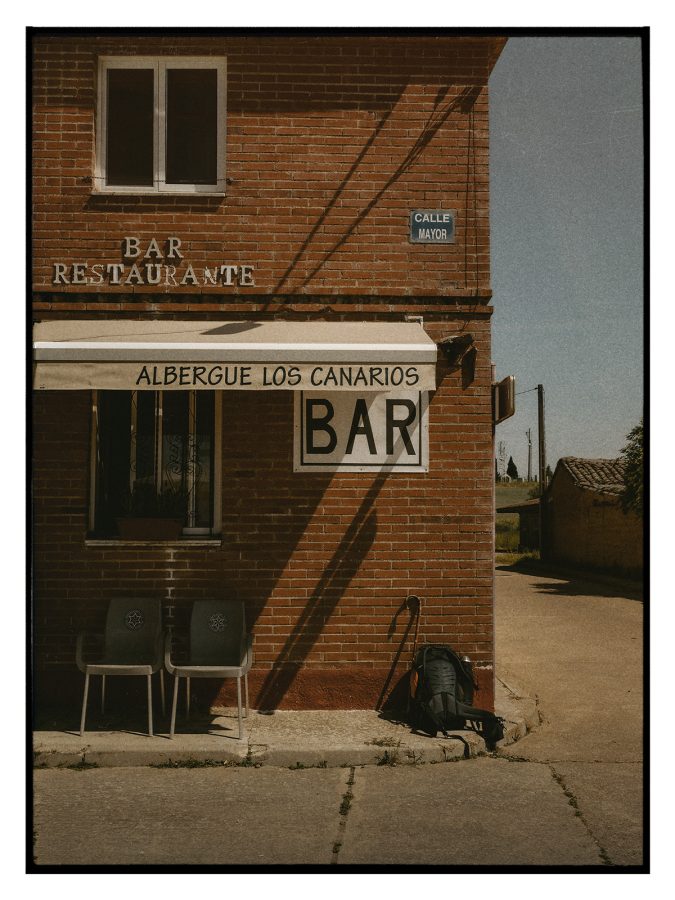
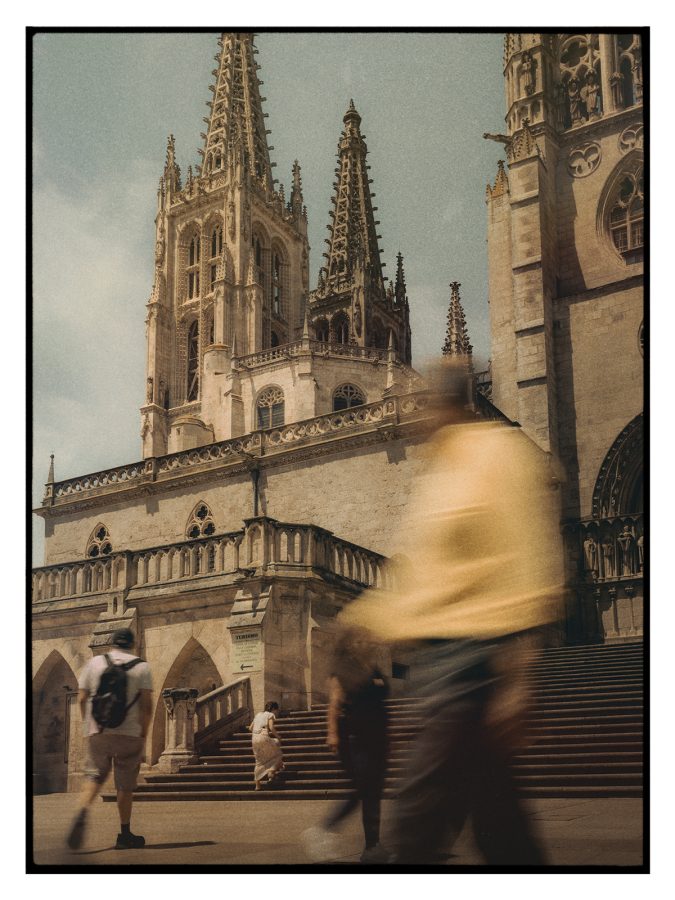
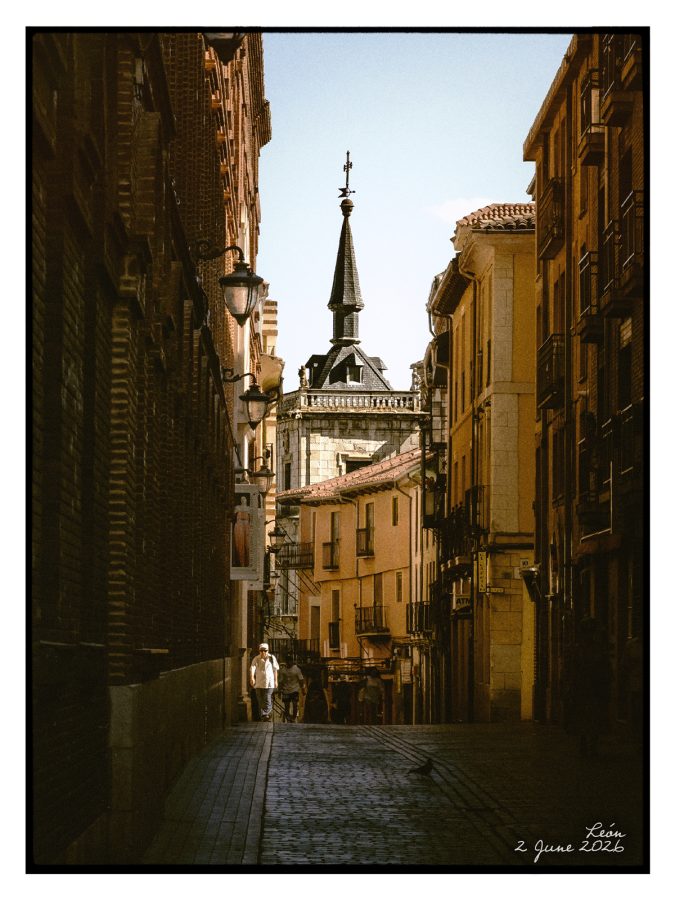
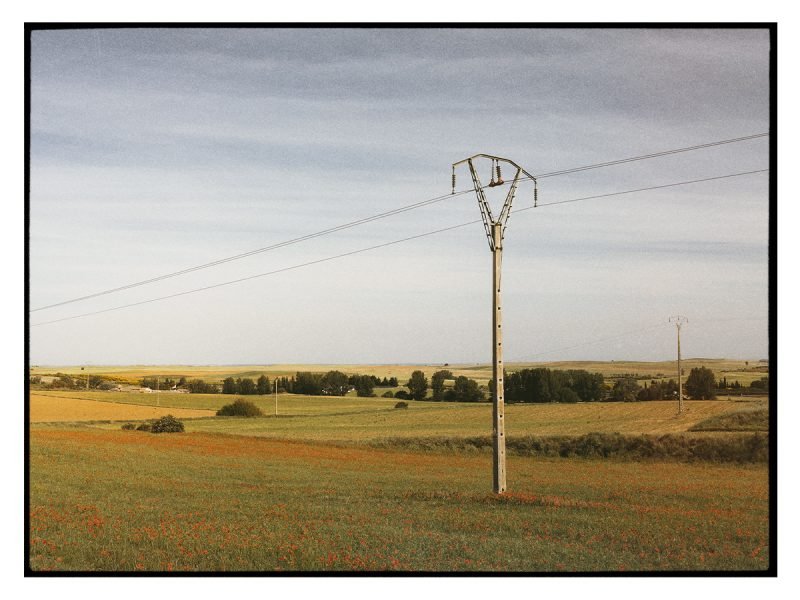
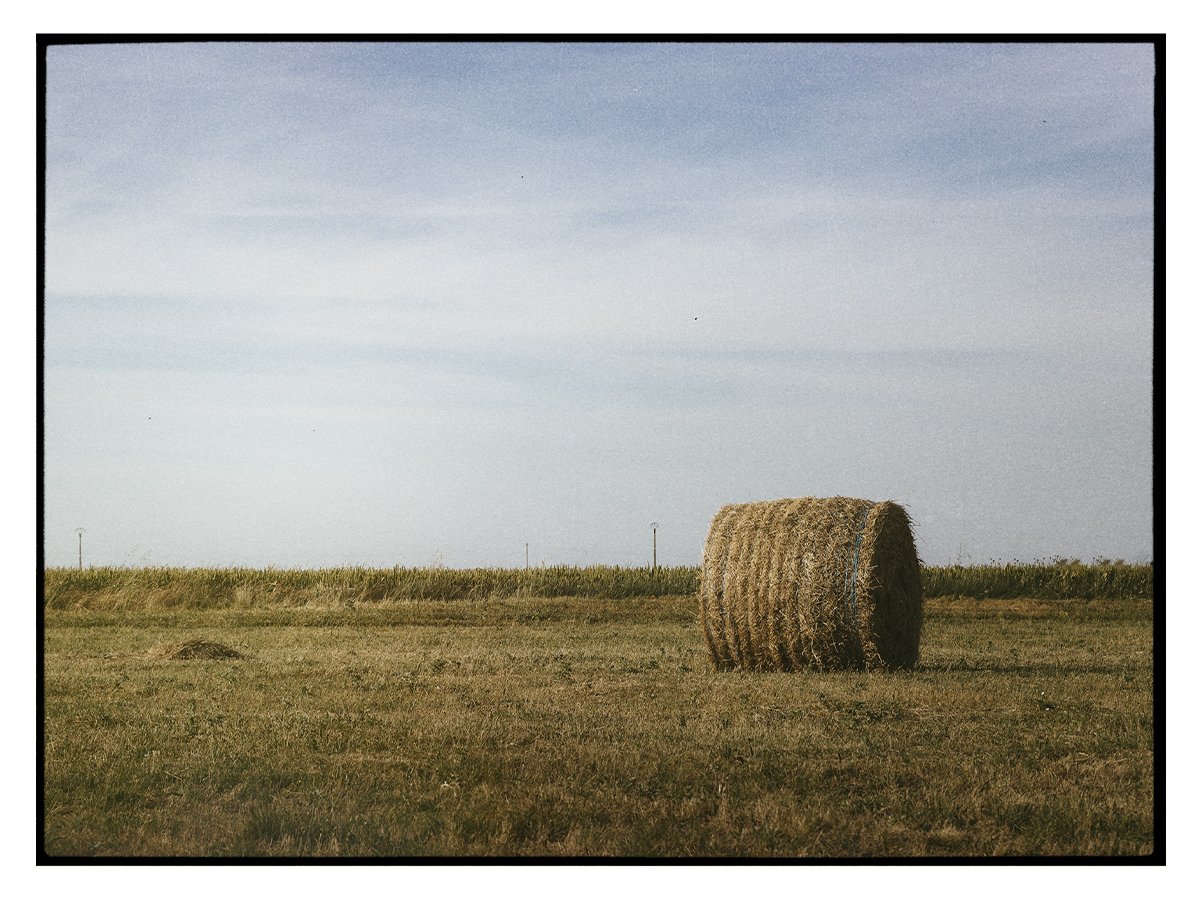
This week, we travelled from Burgos to León, a 180-kilometre journey across some of the most unforgiving terrain of the Camino. Flat, desolate and devoid of the natural topography that largely dictates our idea of beauty, this section, known as the Meseta, is the trail’s great contradiction. The elevation is minimal, and yet the walking seems more tiring. The distances between towns are shorter and somehow, the isolation seems to stretch on forever. The once-forboding challenge of climbing mountains on aching legs suddenly gives way to a much more persistent devil; the roaming conscience.
The wandering body becomes the wandering mind.
I had heard a great deal about the Meseta when we first began the Camino. Pilgrims would discuss it with a sort of nervous anxiety, imbued with a mixture of equal parts fear and optimistic uncertainty. I did not understand. To me, the Meseta was the break period, a boring section between elevation where nothing of any real importance was to occur. It was a chore to be overcome, a necessary respite from the actual challenge of walking 800-kilometres, not something to be feared. As I have said previously, I maintain that most people walking the Camino do so because they are searching for something; be it redemption, religion, hope or something more physical.
I realise now that the Meseta is where they all hoped to find it.
Ridiculous, isn’t it? This idea that something as simple as walking in a straight line across a flat, barren field millions have walked before could lead to a profound personal discovery. What life-altering revelation could possibly rest in the 224-kilometres between Burgos and Astorga?
But oh what providence, what divine intelligence that I should do just that. The Meseta has shown me something I never expected, something I never believed to be true until now. It has shown me that the only memory is now.
When I first planned this trip, I had designs of writing every day, finding a pocket of quiet in each afternoon to assemble my jumbled collage of thoughts into a structured, comprehensible idea. That hasn’t happened.
I’m glad.
I worry so much about memory, that I’m not enjoying life as it happens. When good things happen, I want to experience them fully, to take a snapshot and remember them forever. But like steam on a bathroom mirror, they fade and dissipate until all I am left with is a reflection of the person I am today, scarcely able to recall those big, exciting moments at all. Perhaps that’s why I love photography, or why I became a journalist in the first place, as a means of documentation.
And maybe, that’s the answer: that big things aren’t meant to be stored away in the recesses of your memory and that you should save those for the more important moments.
So no, I don’t remember everything, but I do remember the little things; those seemingly inconsequential moments that tend to leave a lasting impression. I remember the jamón croquettes in Burgos and the way my wife’s glasses always slide off her face when she wears sunscreen. I remember the towering altar in Navarrete and the taste of the first Estrella after a 30km walk into Boadilla del Camino.
But most of all, I remember what it felt like to truly let my mind wander without the worry of where it would venture. That is the great contradiction of the Meseta, that wide, flat plain where supposedly nothing happens.
This is an edition of The Camino Diaries, an ongoing series from MADE Journal founder and editor Nicholas Hall about his experience walking the Camino de Santiago. The weekly columns are matched with a daily social media series that sees him release one frame from the road, exploring the process of walking 800 kilometres from Saint-Jean-Pied-de-Port in southern France to Santiago de Compostela in Spain. Each day, he shares honest reflections from the trail, the people he meets, the struggles of the journey, and the moments that slowly pull him back to himself.




Hello Nick, I live in a small town in the US. Is there a way to purchase any of your photographs from your trip? Today I watched Day 34. You had a picture of a bull eating grass behind a misty cloud and blue sky. I’m trying to remember the first picture I really liked. I guess I will go back and watch them all again :-). I also liked the man and his donkey. Thank you.
‘Life is what happens to you when you’re busy making other plans’ as Lennon sang. Meseta lessons for life, well learned.