







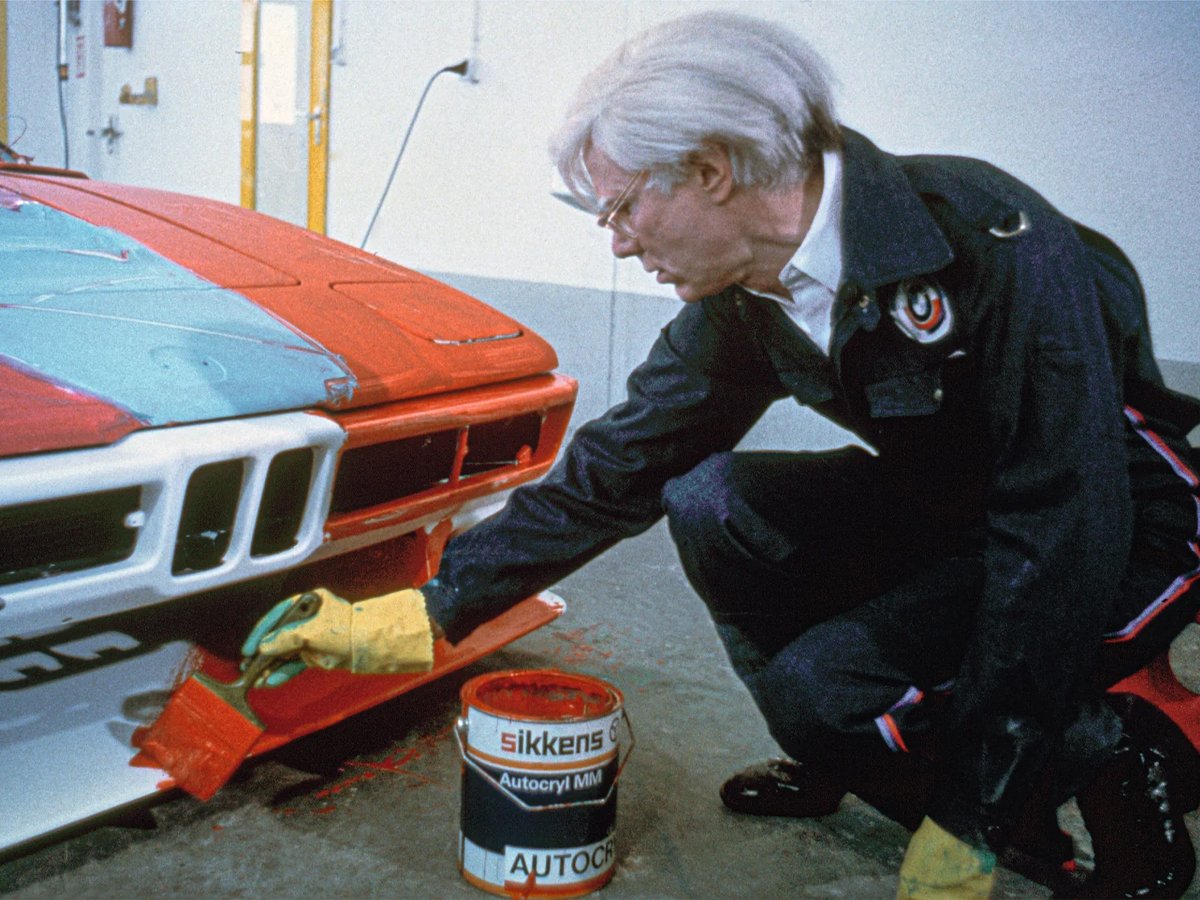
In 1979, BMW gave Andy Warhol three weeks to design a livery befitting of its flagship M1 supercar. The legendary pop artist needed just 28 minutes.
It was an early mid-May morning in 1979 when Walter Maurer laid out the paints that would change automotive history forever. Inside his Hebertshausen workshop, the paint store owner carefully prepared colours based on a maquette that American multi-hyphenate Andy Warhol had recently painted in New York. Lush greens, vibrant reds and the very BMW M1 supercar that was to serve as the canvas for the masterpiece, lay in wait for the legendary pop artist’s arrival. However, no one could have predicted what would happen when Warhol eventually stepped through the door.
The story goes that the artist, tasked with designing a livery befitting of BMW’s flagship vehicle, needed just 28 minutes to bring his vision to life. In a frenzied display, Warhol poured hundreds of litres of paint across the car’s wedge-shaped body, covering the racing machine in sweeping bands of colour and smearing it in fluid motions with his bare hands. Through his frantic movement, new textures emerged and before the paint had even begun to dry, Warhol was done, leaving behind an artwork that had his fingerprints, quite literally, all over it.
As an art lover, I had heard the legend of Warhol’s 28-minute intervention before, but it wasn’t until I was standing three feet away from the artwork in question that I really understood what he was trying to say. The thick layers of paint caked on the bonnet like cooled magma after a volcanic eruption capture something innately human: the idea that good things don’t always have to take time.
Sometimes, all you need is a spark and for BMW, the brand behind the Warhol commission, it came from the most unexpected of places.
Birth of a Movement
It’s hard to imagine a less likely figure to helm an art movement than Hervé Poulain. The auctioneer and avid amateur racing driver was not an artist, curator or museum director, but he understood the power of provocative marketing. Armed with a lifelong dream to compete at the gruelling 24 Hours of Le Mans, Poulain hatched a simple plan: find a manufacturer willing to support him and ask an artist to transform his racing car into a work of art.
“He found a sort of partner in crime with BMW because the brand at the time was sort of resetting its motorsports department,” Christiane Pyka, spokesperson for Cultural Engagement at BMW Group, tells me. “It was led by Jochen Neerpasch, a wonderful man who essentially created the standalone company, but also recognised that it needed to generate a return on investment.”
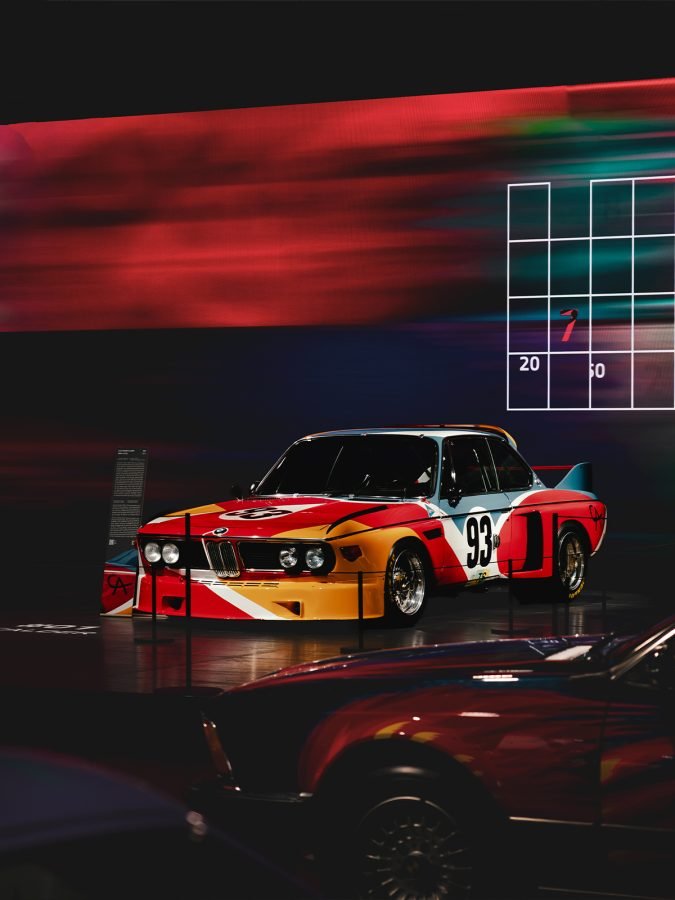
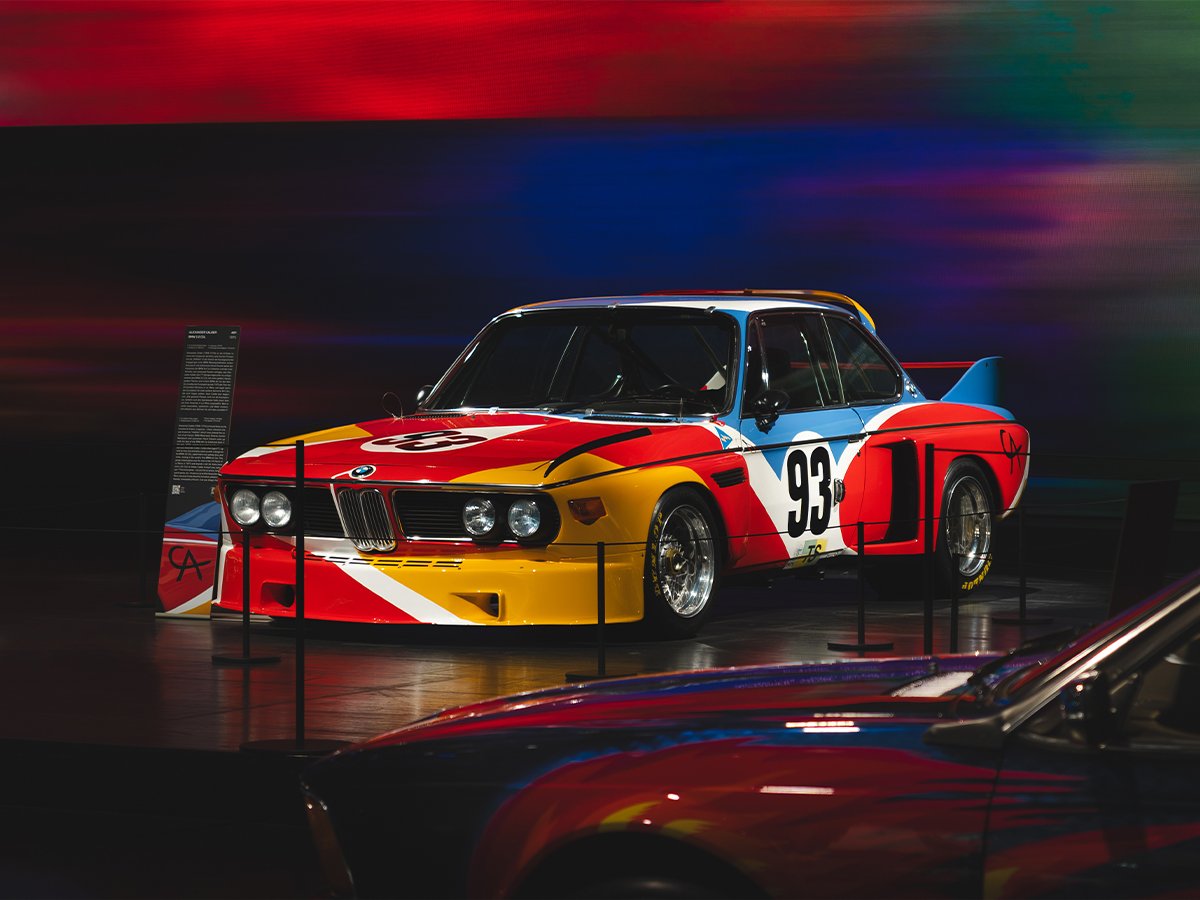
For Neerpasch, who was looking to establish BMW more firmly in competition, the proposition was a marketing opportunity to good to ignore. Together with Poulain, he convinced American artist Alexander Calder to transform a BMW 3.0 CSL into a masterpiece on wheels.
Calder had spent much of his career challenging conventional ideas about sculpture. His mobiles introduced movement and balance into three-dimensional work, while his use of primary colours became a signature of his visual language. The BMW 3.0 CSL offered an entirely new canvas. Calder’s bold blocks of colour followed the contours of the car, creating a work that was instantly recognisable on the track. More importantly, it set the wheels in motion for something much bigger.
The BMW Art Car Project was born.


Evolution
Over the last half-century, 20 artists have been invited to reinterpret BMW vehicles, using them to explore questions around painting, sculpture, identity, technology, mobility and the environment. Indeed, the BMW Art Car was never meant to spark a movement, and that may be precisely why it did.
“We always say that the good thing about the BMW Art Car is that BMW didn’t invent it because the project really came from an outsider’s view and from an expert’s mind,” Pyka says. “Jochen Neerpasch actually told us that it was the moment he saw the Calder Art Car shown first at the Louvre, the most famous museum in the world, and then at Le Mans, that he realised ‘Okay, we’re onto something, we have to continue this’.”
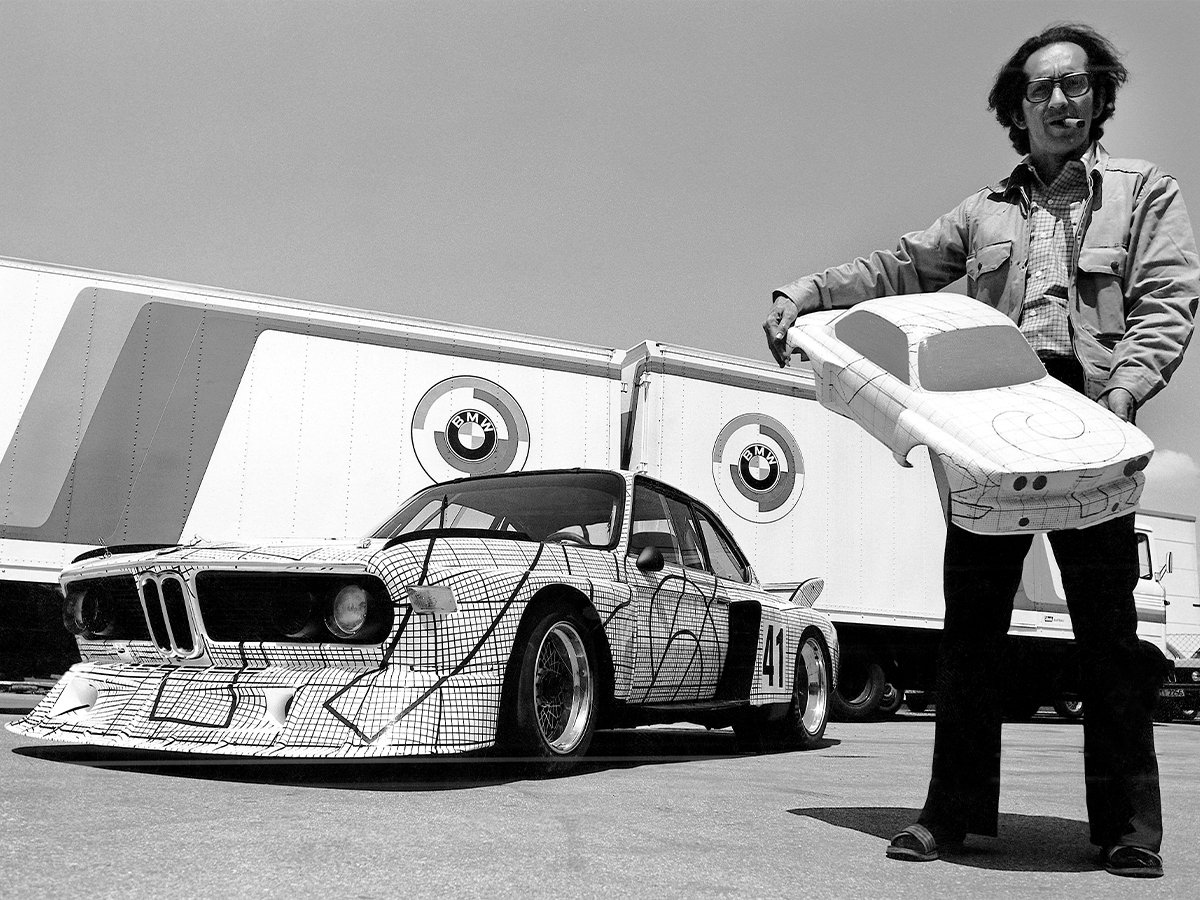
From 1975 to 1979, BMW did just that, teaming up with some of the most respected and influential names in modern art, challenging them to expand their creative palette. Frank Stella’s 1976 Art Car, for example, enabled the artist to explore physical mediums in a way his traditionally minimalist paintings did not.
“Frank Stella, he always said that the Art Car was one of the first times he actually looked into three-dimensional work at all,” Pyka said. “Before then, he was only doing paintings on minimalist flat canvases, but when he started to experiment more in the third dimension, he realised he could look at this work as a sculptural object.”
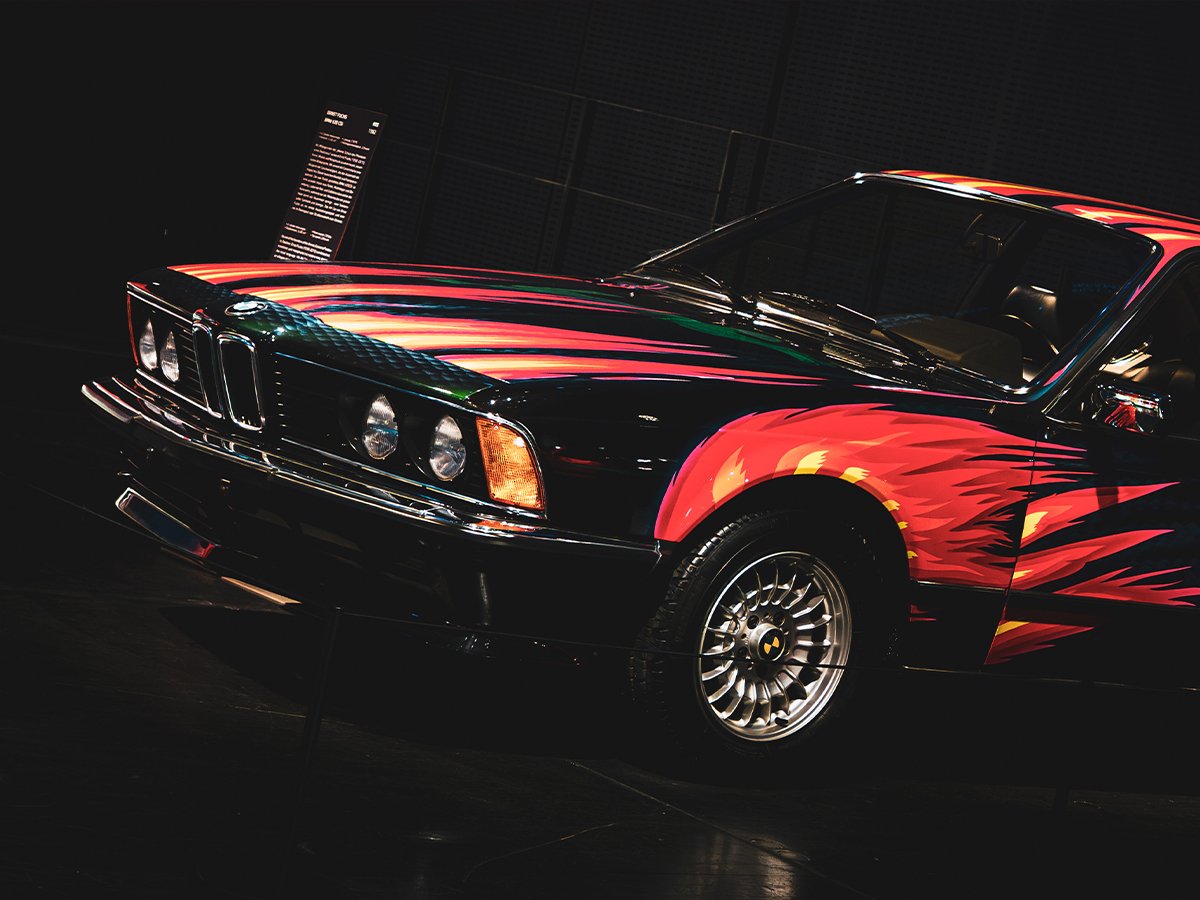
Roy Lichtenstein, Warhol and Ernst Fuchs followed, transforming a BMW 320i, BMW M1 and BMW 635 CSi respectively. By the mid-1980s, the Art Car had established a simple but effective pattern: BMW provided the object and the platform; the artist determined what it could become.
A Moment in Time
“If you think about it from an art history approach, it really is a rounded picture that takes you through different styles, different regions, different eras,” Pyka says. “It has obviously a lot of superstars, but it also has some artists that were only famous for a certain moment in time. They give this window into a certain region at a certain juncture.”
”Ernst Fuchs from Austria, for example, was a big thing in the early ‘80s, but maybe not so much anymore. There is also a very special contribution from our Japanese artist, Matazo Kayama, who is not particularly well-known or famous anymore, but he has this really beautiful work that he did both for the Art Car and in his own artistic practice. We always say it’s like a big museum collection, full of hits and misses, but you can really see that every piece has its meaning and does belong in its time and in its context. That is a big contribution.”
That contribution is not simply visual. In the 50 years since Poulain first laid the groundwork, several artists have used the Art Car Project to raise questions of cultural identity through a medium that millions of people already instinctively understand.
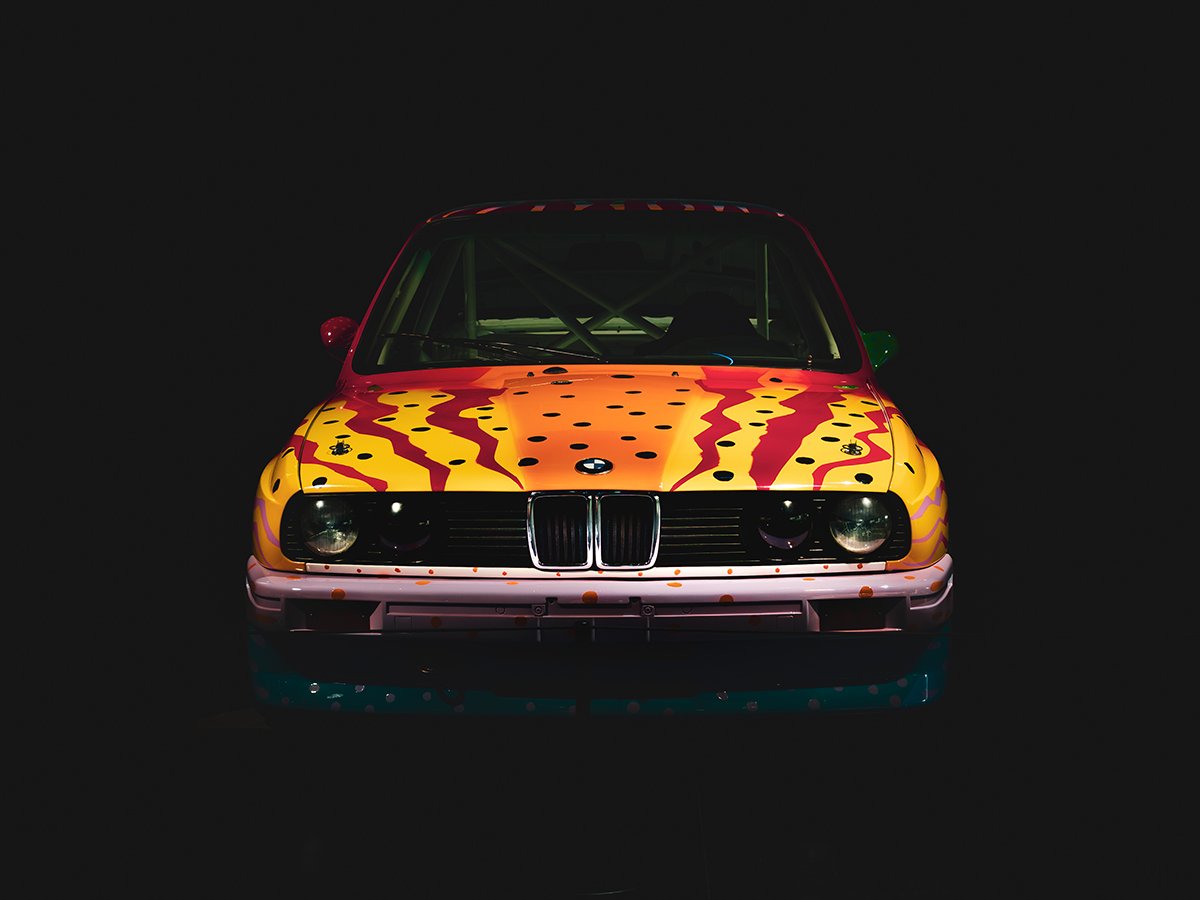
Esther Mahlangu’s 1991 BMW 525i brought the geometric visual language associated with Ndebele art onto a BMW, creating a work that connected African artistic traditions with a European industrial product. Meanwhile, Michael Jagamara Nelson’s 1989 BMW M3 Group A Race Version reflected a masterpiece of Papunya art, using geometric shapes and patterns to evoke a rich Australian mythology.
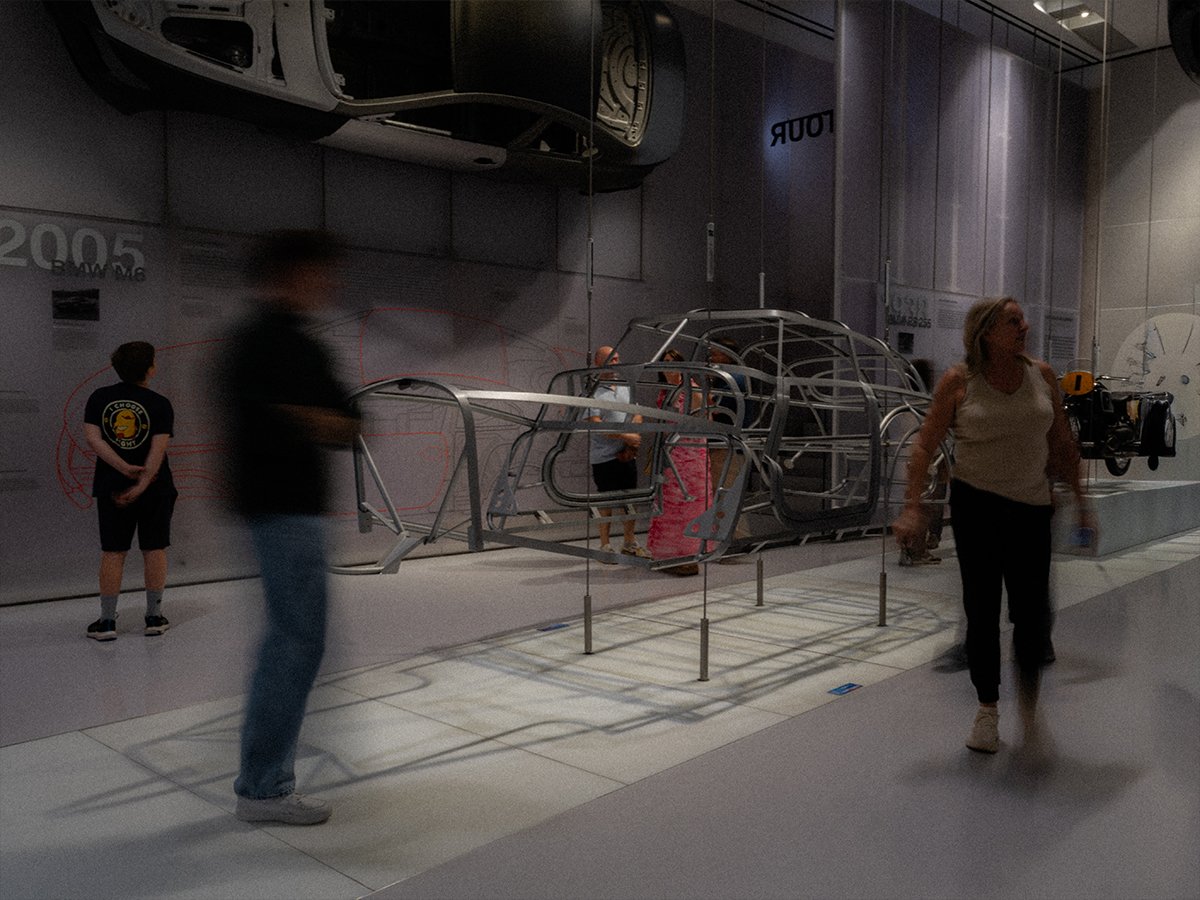
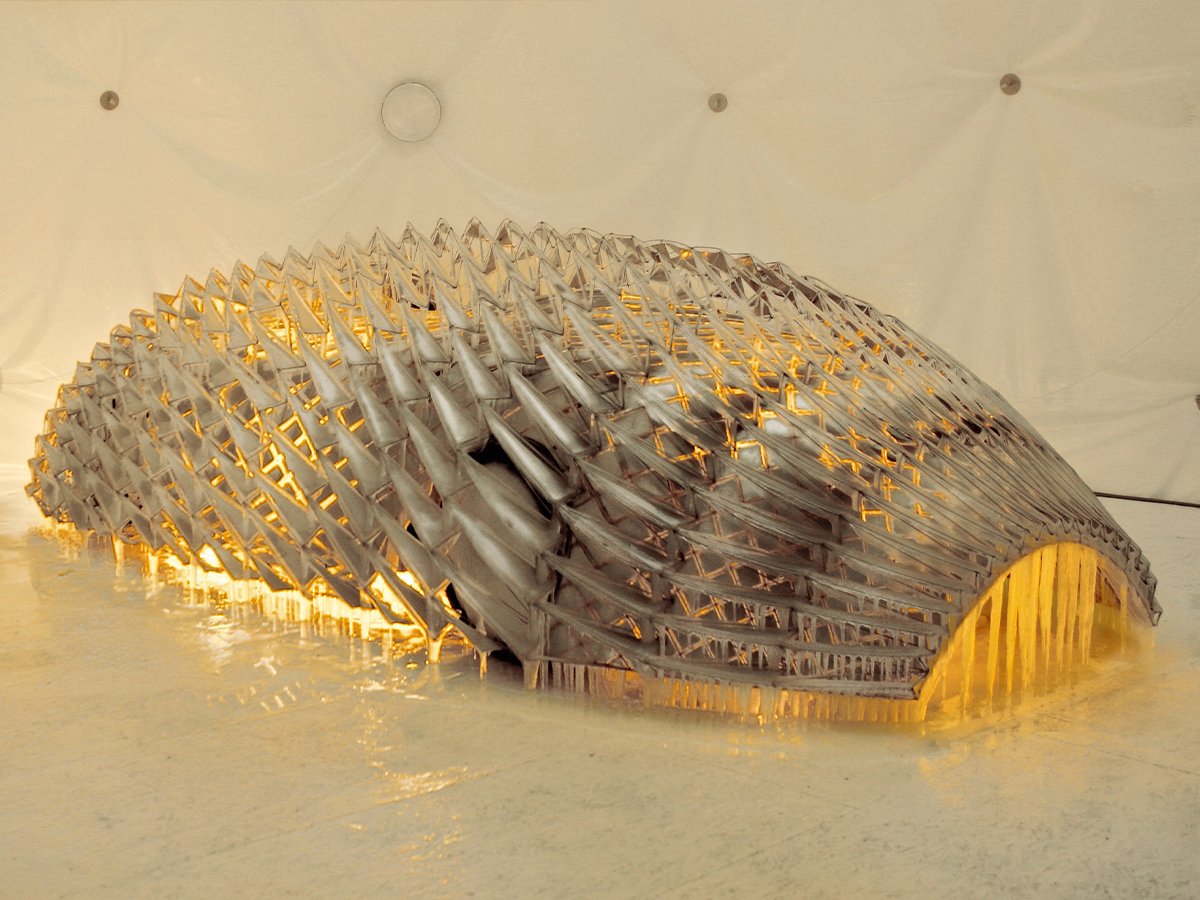
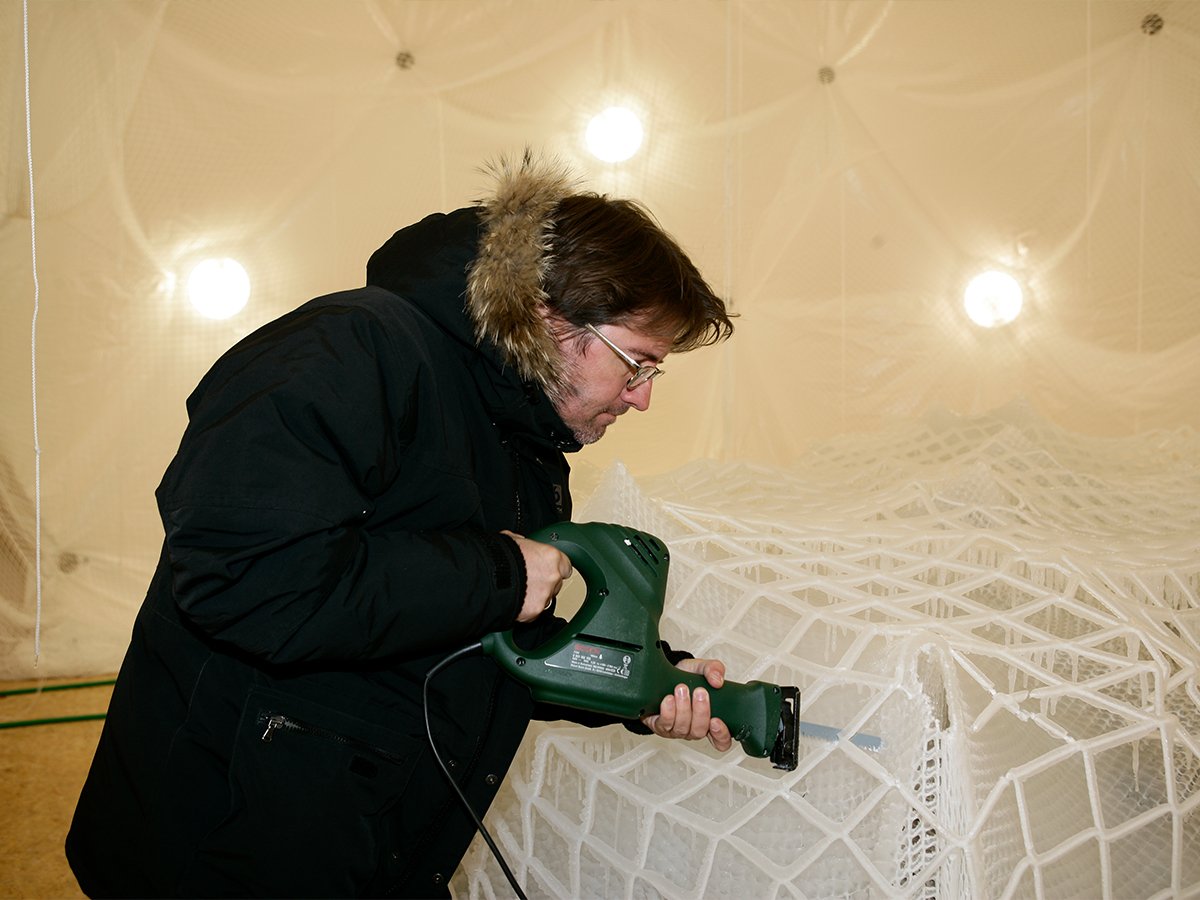
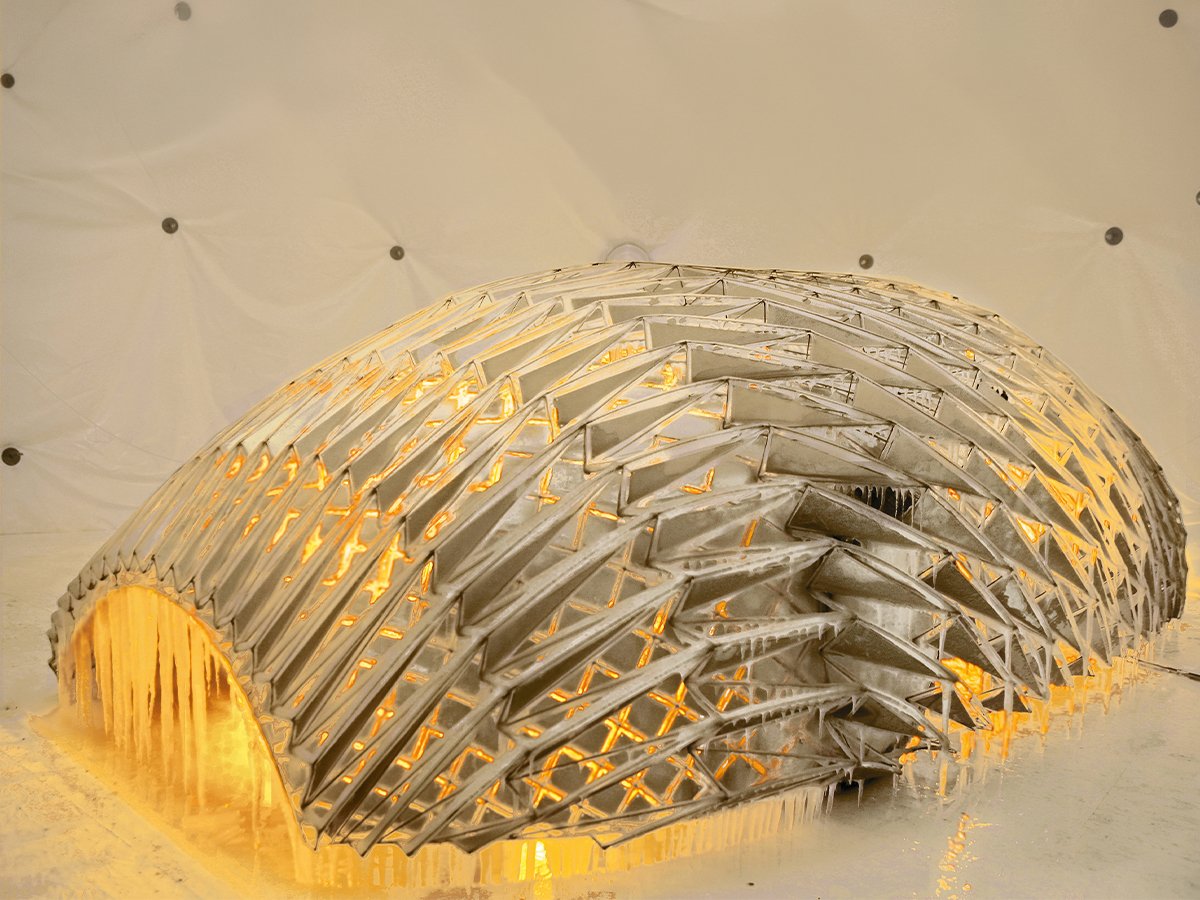
But no Art Car has challenged the rigidity of modern art quite like Olafur Eliasson’s 2007 BMW H2R. In a move that required dozens of assistants and hundreds of hours of work, the Danish artist took the hydrogen-powered prototype and stripped it down to the wheels, chassis, steering wheel and seat. He removed the bodywork and logos and built a new structure from metal mesh and reflective plates around the remaining framework. Remarkably, the entire installation was then frozen.
“With Olafur, he really approached the project like a scientific lab process,” Pyka says. “The car was in the studio. He had 20 people working for him from all different fields at the intersection of science, design and architecture.”
“We don’t tell the artists what to do, we give them full creative freedom, We don’t even choose these artists, a jury chooses these artists.”
The work, which bears the subtext Your Mobile Expectations, spoke to an evolving relationship between vehicle and function. For the first time, a machine designed for speed and mobility became an object frozen in time.
“It’s like a very visceral and reflective moment because you just cool down both mentally but also physically,” Pyka says. “You just start to wonder and really think about mobility, and that comes through in the subtitle of the work, which is your mobile expectations.”
Moreover, Eliasson’s approach also tested how much freedom BMW was prepared to give an artist.
“I wasn’t in the company at the time, but I’m sure some eyebrows were raised when they first saw the proposal—taking a car, ripping out all the logos, just completely deconstructing the body work and creating this super intense installation project—but I think it’s such an important contribution to the BMW Art Cars in retrospect,” Pyka says.
It’s that very freedom that has allowed the Art Car Project to endure. The vehicles have become so much more than the rolling billboards that Poulain may have originally envisioned. Over five decades, these artworks have become unique mediums that embolden great minds to speak freely about politics, technology and sustainability through an object that millions of people already understand instinctively.
“We always say artists are seismographs of our time,” Pyka says. ”They have this visionary mind that not only has a very clear analysis of the status quo, but also a vision for the future and where things could be headed. It’s a symbol that BMW takes seriously what is happening in the zeitgeist of the time. It really looks beyond its own company to collaborate.”

BMW Art Car Exhibition Event Special 2026
It’s a conversation that I saw come together in Munich, where I was on the ground for the BMW Art Car Project’s 50th anniversary exhibition at BMW Welt. For the first time, all 20 Art Cars were brought together in one place.
It is a strange experience seeing them side by side. Calder, Stella, Lichtenstein, Warhol, Mahlangu, Eliasson and the artists who followed are separated by decades and radically different practices, yet they all share a common language. In a way, it becomes a question of philosophy. Engineering answers the practical challenge of creation, while art questions how that makes us feel and what we’re comfortable with seeing.
That may well change with time. As Pyka explains, the next Art Car does not necessarily need to be more radical, it just needs to be honest. And that might involve looking backwards.
“In terms of radicality, that’s not even the goal. I think it has to be timely and fit into the world that we’re living in,” she tells me. “It should put some meaning into it and let us, as good art always does, think about the state of the world that we’re living in.”
”It’s funny; when we asked Walter [Maurer] and also Jochen Neerpasch, they both said that they have this wish to be radical in a different way. To not do an AI art car, but to go back to this tradition of actual painting and of actual manufacturers.”
The BMW Art Car may have begun as a marketing idea that happened to involve an artist, but 50 years on, it has become a living time capsule, not only of design but also of political movements, pop culture and society at large. If we can learn anything from the Art Car Project, it’s that art is at its most powerful when it refuses to stay in its lane.
The Art Car exhibition at BMW Welt marks the grand finale of the BMW Art Car World Tour, the largest exhibition project in the collection’s history. To celebrate the 50th anniversary of the BMW Art Cars, an exhibition programme has been taking place worldwide across five continents since March 2025.


DISCLAIMER: MADE Journal was invited to attend the Art Car exhibition at BMW Welt as a guest of BMW Australia.


I love that BMW support artists in this way and to have a car painted by Andy Warhol is mind-blowing. Luxury and art will always go hand-in-hand and I hope we never lose this connection.