



How the French New Wave became an unlikely blueprint for the digital age, and why Richard Linklater’s upcoming film Nouvelle Vague is arriving right on time.
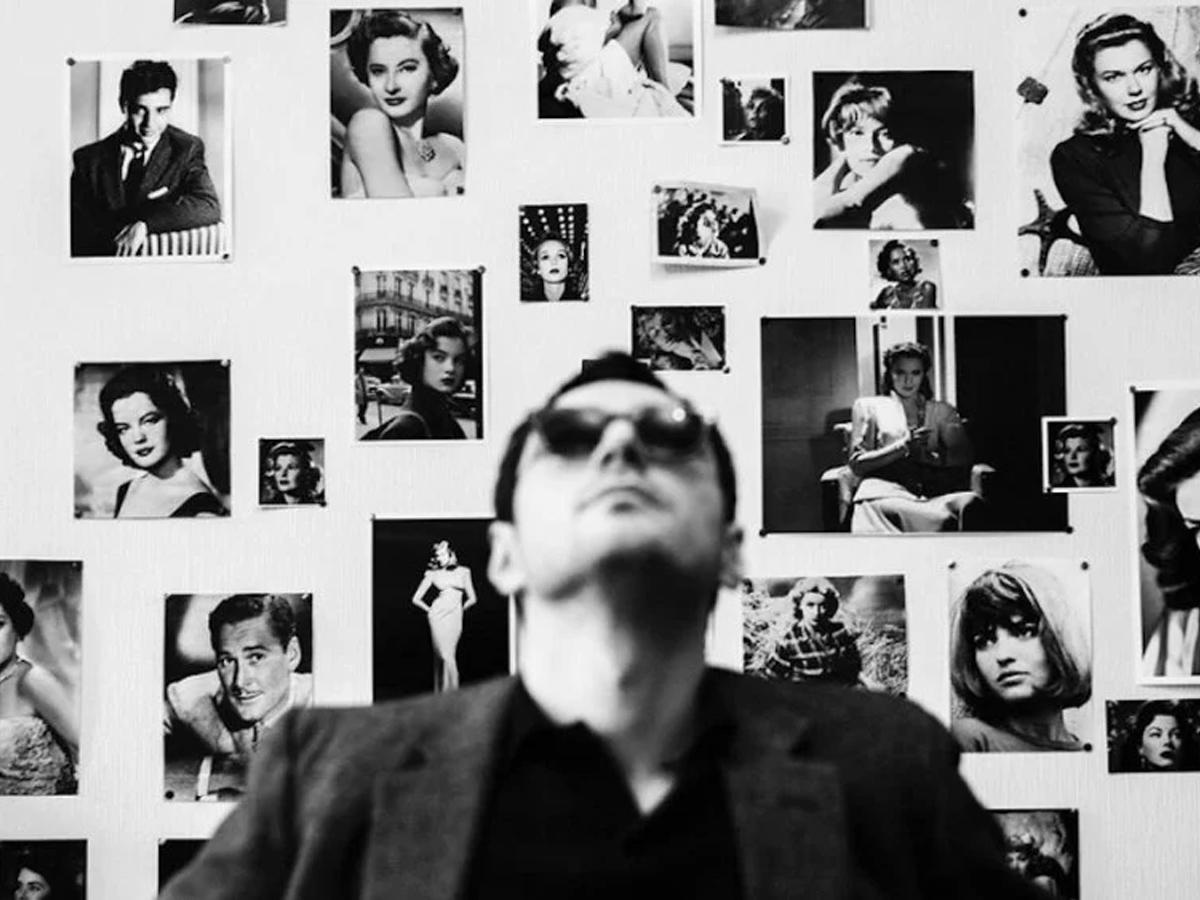
Before TikTok, YouTube, daily vlogs or get ready with me clips, a group of enthusiastic Parisian cinephiles rewrote the language of cinema using nothing but lightweight cameras and the naive confidence of youth. They called themselves the Nouvelle Vague, the French New Wave, and no filmmaker embodied its restless, rebellious spirit quite like Jean-Luc Godard.
A formidable figure throughout this movement, Godard famously declared that cinema was truth at 24 frames a second. It was a provocation that came to define his career. Across iconic films like Breathless, Alphaville and Pierrot le fou, the influential filmmaker demonstrated a profound rejection of convention.
Subverting the polished studio productions that largely dominated 1950s France, Godard embraced spontaneity, non-conformity and the idea that the director was more of an author than a general technician. His films were urgent, political and often playful, caked in a heavy layer of cigarette smoke and natural light.
And yet, despite Godard’s most prominent films pushing 60, his work feels startlingly contemporary. His independent approach to cinema, auteur theory and distinctive editing style paved the way for the digital age of filmmaking and his influence is everywhere. In many ways, Godard helped invent the chaotic, self-aware audiovisual grammar that now defines the internet.
As we approach the release of Richard Linklater’s Nouvelle Vague, the connection between Godard’s mid-century radicalism and today’s digital culture has never felt more evident. Let’s break down a few ways Jean-Luc Godard’s legacy lives on in contemporary media.
Jean-Luc Godard and The French New Wave
Emerging in the late 1950s, the French New Wave movement was born out of frustration. A generation of critics, including Jean-Luc Godard, François Truffaut and Éric Rohmer, all of whom either contributed or were associated with the French film magazineCahiers du Cinéma, had grown tired of the polished style of entertainment filmmaking dominating the industry.
Instead, the group believed that a move away from slick, multi-faceted productions would provide fresh perspective. Armed with handheld cameras, minimal budgets and guerilla approach to shooting, they set out to inject a sense of realism into cinema, and by doing so, birthed the idea of ‘auteur theory’.
Auteur Theory: The belief that a film should express the director’s personal worldview as clearly as a novel expresses its author’s.
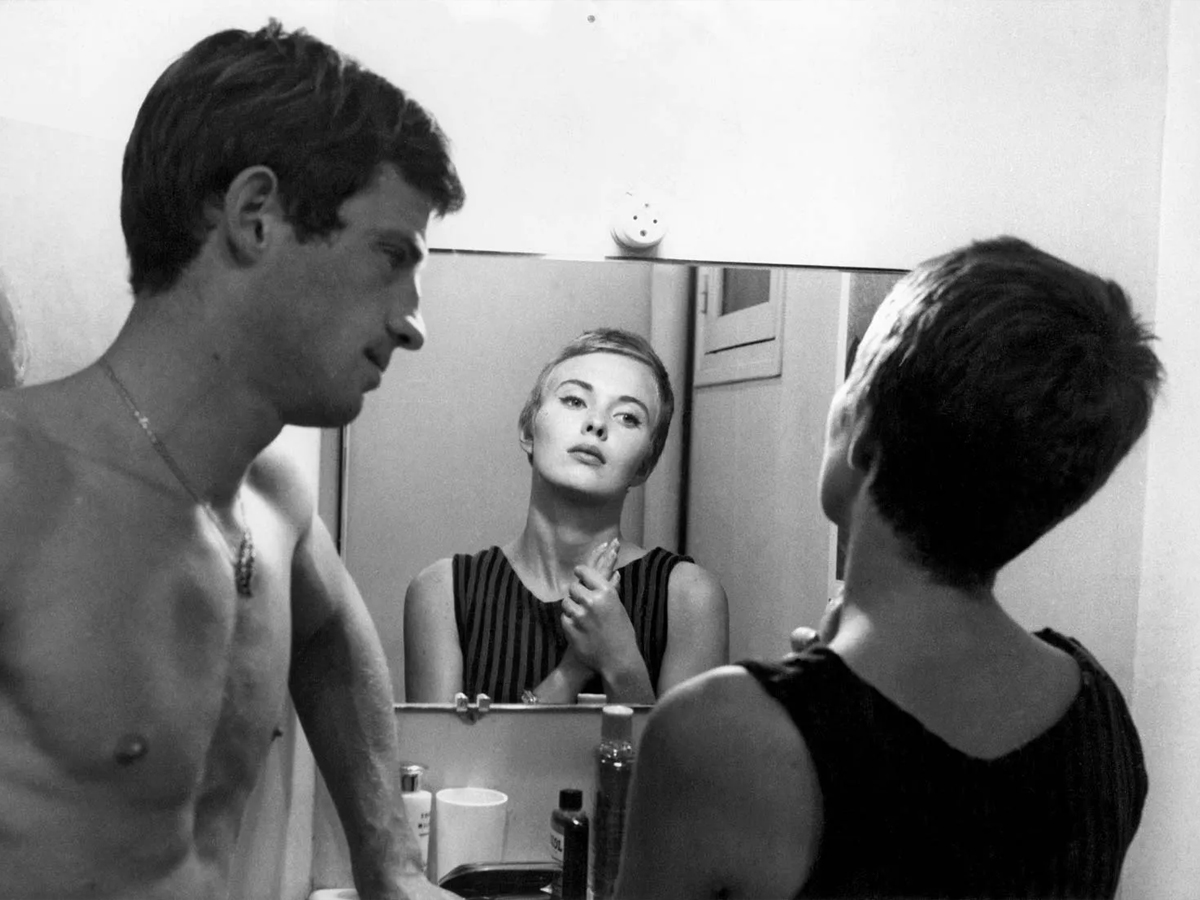
Auteur theory formed the philosophy of Godard’s 1960 debut feature Breathless, which is widely regarded as the origin of the movement. A starkly combative release, Breathless defied convention in a way that felt raw and intimate, introducing a new visual language. Today, that language is everywhere.
Jump Cuts
Regularly used to help influencers achieve brevity in their daily vlogs, in the 1960’s, the Jump Cut was a fresh take on editing. An abrupt transition in film or video that cuts from one shot to a very similar shot, the Jump Cut makes the subject appear to “jump” forward in time. It’s created by removing a middle section of a continuous shot and splicing the two ends together, which draws attention to the edit rather than the illusion of seamless continuity.
In Breathless, Godard used these jagged transitions in rhythmic cadence, helping to steer the timeframe without needing to conform to reality. By forgoing continuity, directors could change the cadence of their films by switching quickly between space and time. It also made the audience acutely aware that they were watching a movie, disrupting the carefully planned continuity laid out by the editorial formulas of traditional cinema.
Breaking the Fourth Wall
While Jump Cuts helped to maintain momentum and preserve attention, Godard’s direct-to-audience gestures gave the cinematic experience a more personal touch. The French New Wave filmmaker made the audience aware of their position, not just through his editing cuts, but by speaking directly to them. Prior to the French new Wave, addressing the audience was seen as a conventional faux pas, a momentary break from the suspension of disbelief.
In Breathless, however, Jean-Luc Godard used this to great effect, orchestrating a playful, and often humorous approach that transformed the audience into active spectators; blurring the lines between story and reality.
Montage
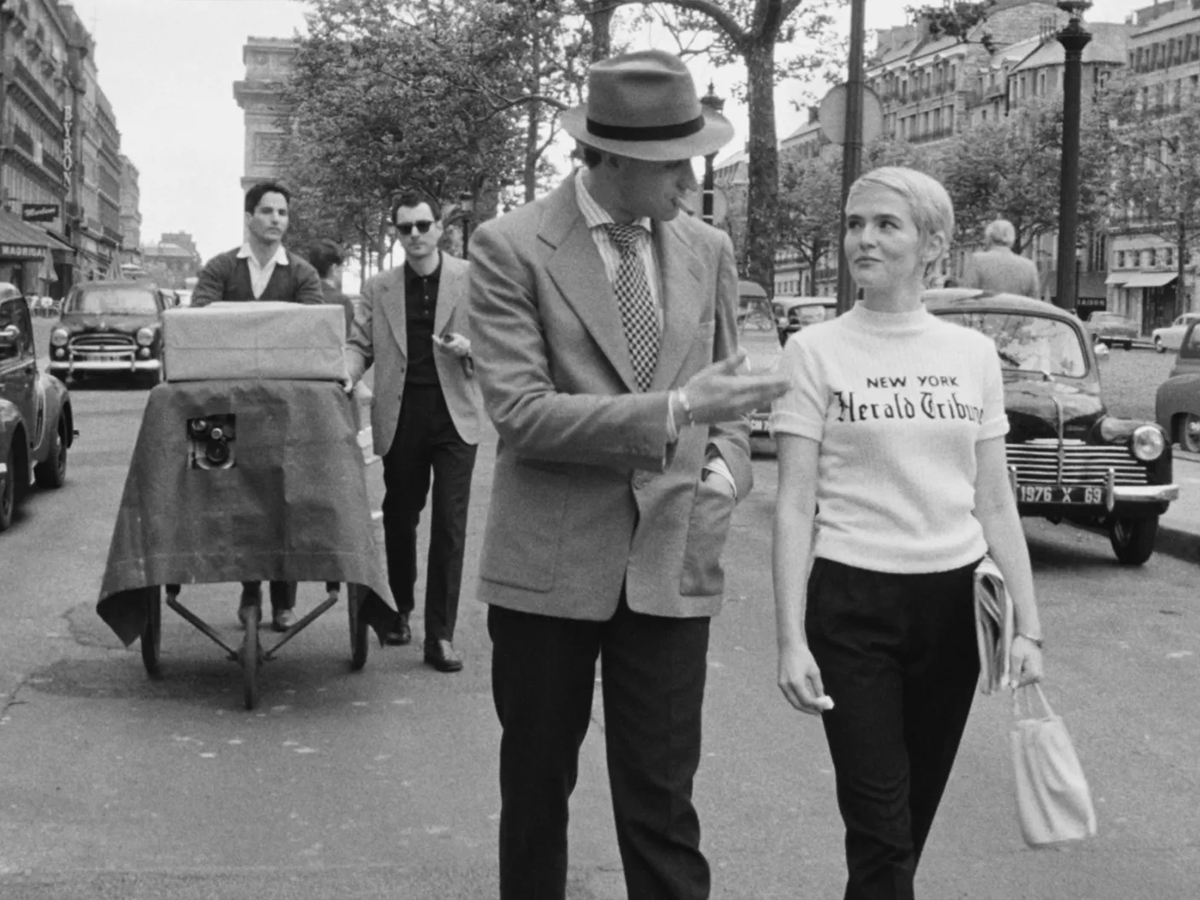
While montage as a film convention certainly predates the French New Wave, Godard and his contemporaries found unique ways to make the stylistic sequence play out. The filmmaker reimagined the montage as a tool of disruption, using contrasting shots to compress time and juxtapose ideas in a way that felt far more like a lived experience than a general recap.
Ubiquitous across our screens today, the montage remains an effective way to deconstruct traditional narrative and challenge the audience’s perspective. Now, due to dwindling attention spans and time caps on our social videos, montage is the dominant narrative form. Every one-minute travel recap of hyper-edited reel employs a foundational stylistic practice that draws its inspiration from New Wave experimentation.
Camera Stylo
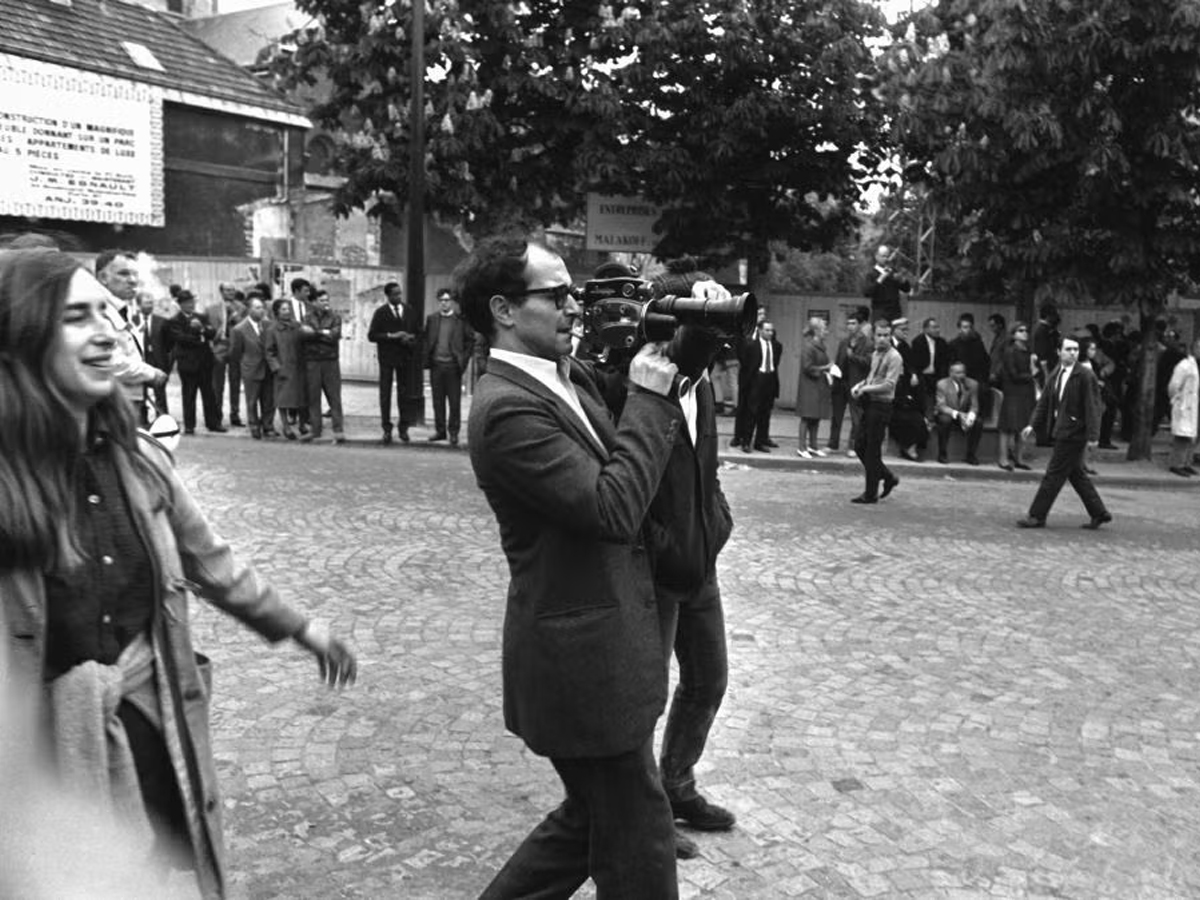
Perhaps the French New Wave’s most enduring contribution, and one of the most significant reasons why we are still making videos today, is the concept of camera-stylo. Articulated in Alexandre Astruc’s influential 1948 manifesto, camera-stylo suggests that the camera could function as a writing instrument, enabling the filmmaker to express their personal vision and style.
For Godard, this was documentary-style footage, shot on a light-weight hand-held camera, with somewhat chaotic pans between scenes and long tracking shots of actors navigating the twsiting streets of Paris. These hallmarks made Godard’s films feel raw, gritty and close to reality.
Camera-stylo redefined the role of director, from a mere link in the film production chain, to that of artist and visionary. Which fed into Godard’s auteur theory that the director is the major creative force behind a motion picture. This freedom in filmmaking and personal perspective is why, in the modern age, so many of us are picking up our cameras.
Why Godard Matters Now
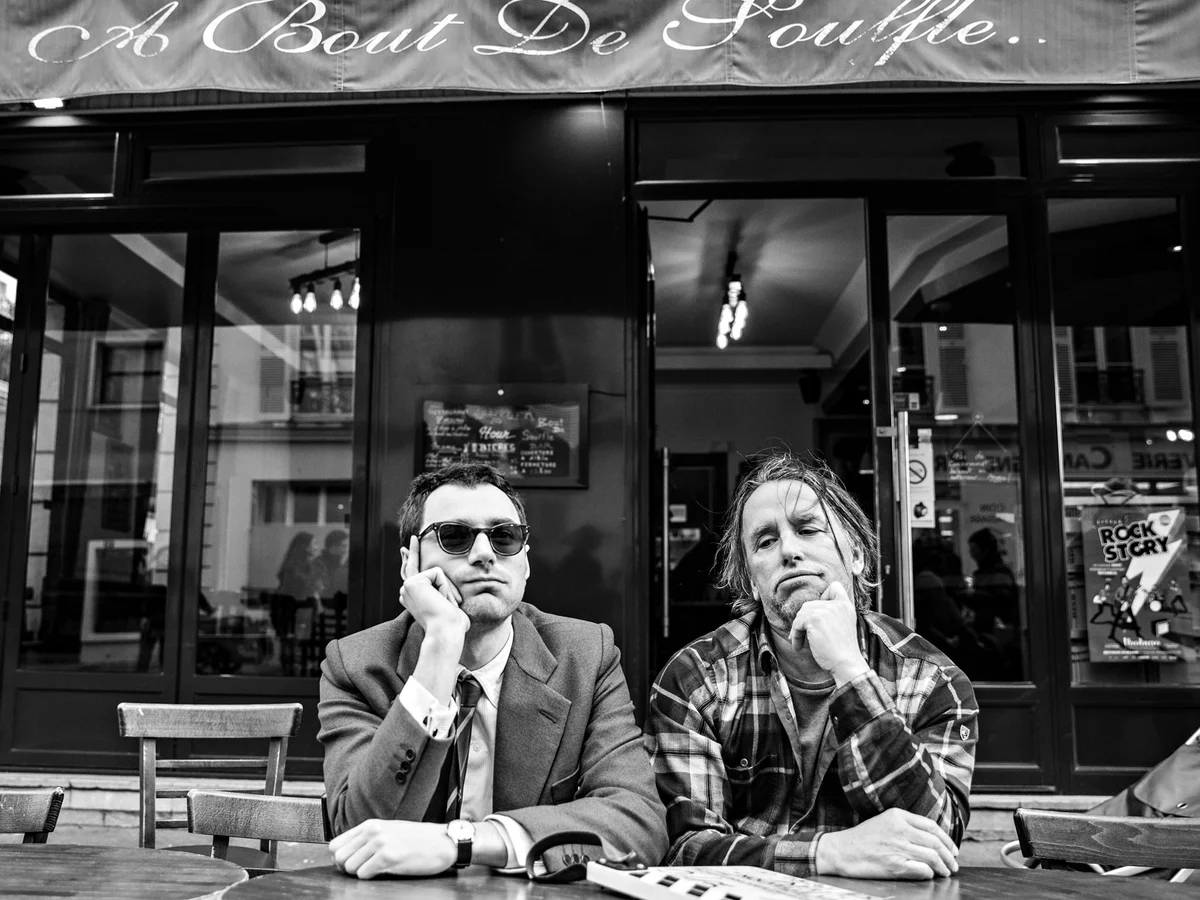
Richard Linklater’s Nouvelle Vague revisit the moment the French New Wave first broke; charting the filming of the seminal 1959 film Breathless. Starring Guillaume Marbeck as Jean-Luc Godard, Zoey Deutch as Jean Seberg and Aubry Dullin as Jean-Paul Belmondo, Nouvelle Vague traces the chaotic, independent origins of the cinematic movement, and it’s a subject befitting of Linklater.
A director known for his experimentation and playfulness, Linklater’s filmography stretches to far ends of the cinematic spectrum, from 2003’s Jack Black musical comedy School of Rock to the multi-generational, award-winning Boyhood. His deep dive in Godard demonstrates a profound respect for the improvisational approach, arriving at a time when the French New Wave legacy permeates global pop culture more than ever.
So, next time you find yourself doom scrolling, take a moment to notice the legacy of Godard and the filmmakers of the French New Wave. Every jump cut, handheld confessional or micro-narratives is, often unwittingly, written using the language that Godard helped create.
The life, legacy and work of Jean-Luc Godard will be explored in the upcoming 2025 film Nouvelle Vague. Directed by Richard Linklater, the comedy-drama film stars Guillaume Marbeck as Jean-Luc Godard, Zoey Deutch as Jean Seberg, and Aubry Dullin as Jean-Paul Belmondo. It follows the shooting of Breathless, one of the first feature films of the Nouvelle Vague era of French cinema, in 1959. Nouvelle Vague will release in Australian cinemas on 6 January 2026.