

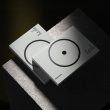



For Cape Town-born, Lisbon-based visual artist Vanessa Teodoro, the most important work of her career began with a difficult question: How do you make something beautiful out of something painful?
In a small Lisbon gallery just steps away from the Tagus River, a tissue box sits beside an old rotary telephone. Despite the obvious setting, this isn’t an artistic flourish, nor a post-COVID attempt at social sanitisation, but rather, a practical necessity. Since opening her latest exhibition, MOTHER, visual artist Vanessa Teodoro has discovered that visitors have a funny habit of bursting into tears.
”Literally two days ago, there was a girl that came into the gallery just before we closed,” Vanessa tells me. ”I was explaining one of the pieces, and she started to cry. I was like, ‘Oh, it’s happening’. It was this whole thing…I know I cried because this whole thing was very sensitive, but I wasn’t expecting that response from the public.”
It’s become an unexpectedly common occurrence. Some visitors arrive curious, others intrigued by the playful black-and-white visual language that has become the artist’s signature, but all leave with a familiar, often indescribable feeling. It starts heavy on the heart and slowly journeys upwards until it forms that uncomfortably rigid lump that sits stubbornly at the back of your throat.

All the while, Vanessa’s restless scribbles and solid-form structures seem to point towards a more personal story; one that makes us think about our own mothers, the things left unsaid and the conversations we wish we could have again.
And that’s precisely when she asks us to pick up the phone.
In her artwork Call Your Mother, the artist invites visitors to use the rotary relic to speak to their mothers, whether they’re still here or not. Each call is recorded anonymously and stored in a memory bank. It’s a simple gesture that asks you to do what so often feels impossible: to tell someone how you feel.

”I just want to remind people of the love that’s still in them. MOTHER is just a little space where you go in and feel okay to feel what you feel.”
”Listening to other people’s messages, you realise how common our situations are,” she says. ”It’s a lot. It’s heavy. It’s scary, but I think that’s what people need now. Seeing those reactions and hearing the feedback, that’s been awesome.”
It is a remarkable evolution for an artist who, until recently, was still making sense of her own emotions. The exhibition was born from a period of uncertainty and grief, spurred by her mother’s Alzheimer’s diagnosis six years earlier. Through darkness and uncertainty, the artist managed to create her most expansive exhibition yet, but that wasn’t always the goal. In fact, before MOTHER was even an idea, it was a reason to get out of bed.

The Road Less Travelled
It is hard to imagine a personality more vibrant and colourful than Vanessa’s, and perhaps that’s why her signature black-and-white style stands out. In a lot of ways, it feels like a rebellion, an artistic defiance that seems entirely at odds with the hypercolour world she inhabits, but peer a little closer at the expressive characters and calligraphic lines that dominate her work, and you’ll start to see why. Vanessa has never been one to follow convention.
“I’ve always been fascinated and motivated by challenges,” she explains. “When people say, ‘oh, you can’t do this’, I’ll do it twice and take photos; especially doing street art in the boys club. I don’t like the path most taken. I like the path less taken.”
The period surrounding her mother’s diagnosis, however, introduced a new kind of challenge. The emotional weight took its tool and with all that was happening at home, Vanessa fell into burnout. Overwhelmed and at capacity, she stepped away from her work and, for a brief period, the whole world.
”I was out of function and offline for about five months,” she reveals. ”Then I did a residency in Alentejo in this farm in the middle of nowhere surrounded by animals running around. That was amazing.”


There, in the rural region of southern Portugal, she was free to ignore the noise, expectations and commercial considerations of being a professional artist. Away from the demands of everyday life, Vanessa finally had the time to rebuild her practice, from the ground up.
”I was just like, ‘Okay, Vanessa, just go back to your origins. Go back to what you have’,” she says. ”I just bought two round wooden canvases to paint on and decided to work only with what I had around. So, that evolved into the different surfaces I worked on. That’s when I was like, ‘Yeah, this makes sense. If I’m going to work with my mother, I’m going to work with Mother Nature’.”


Art as Healing
Those initial experiments not only kickstarted a new creative process, but also laid the foundations for MOTHER, part of a wider exhibition titled The Metamorphosis of Creation. As Vanessa explains, the show explores transformation as both an artistic process and an inevitable part of being human. It celebrates motherhood in its many forms; the complicated relationship between mother and child, inherited traditions and the ways in which we are continually shaped by the environments around us.
“I usually always turn to art when I’m in a shit show,” she says. “I speak for myself, but I think most artists make the best art when they have a lot going on. At the time I just wanted to make sense of things.”
”Every time I have something to process, I always do a show. This was the biggest thing I’ve had to process in my whole life, my mum’s diagnosis, and that ultimately led to the biggest show that I’ve done so far.”
“Art is a great therapist. Saving on shrinks and making art is a great thing to do.”
Vanessa Teodoro, Artist
Importantly, MOTHER is more than just a visual representation of her mother’s illness. Alongside her own work, Vanessa collaborated with older women in the interior of Portugal, drawing on traditional rug-making techniques, as well as women from Cape Town, the city where she was born.
“For me, it’s about bringing back handmade, bringing back ancient traditions and techniques and adding a modern twist,” she says. “How do we keep this alive but still give it a little spritz, you know?”

But among the stories of Mother Nature and Mother Earth, sits an undeniably personal note. In Dear Mother, a piece that began as a tribute to the artist’s own mother, Vanessa lays everything bare. A beadwork frame displays the phrase ”You Did the Best You Could With What You Knew At the Time”, a message the artist reveals has evolved in meaning over the journey.
”Since she was diagnosed six years ago, I’ve been having more conversations with her, taping them and doing videos,” she says. ”I asked her, ‘Oh, mom, do you have any tips for the future?’. And she was like, ‘Just do what you want and don’t let a man boss you around. Be independent.’”
”It was all these things that she didn’t do and things that she felt that she didn’t have the time or the courage to do. So I found myself saying, ‘Mum, you did the best you could with what you knew at the time’.”
“Sometimes she wasn’t the greatest mum in certain aspects, but that was how she coped. So, it was kind of for her, but then it also ended up being for me. We are so hard on ourselves. That piece ended up being a reminder to her and to me and to everyone, that we’re always learning, always growing.”


”They Say Art Will Save Us”
MOTHER is a profoundly moving and intense experience, but like so much of Vanessa’s work, it does carry an earnest playfulness. Messages are inscribed on surfboards and tapestries are imbued with a familiar irreverence, only this time, the artist asks you to do more. MOTHER doesn’t offer any easy answers about grief or the complexities of relationships, but it does create room for people to find connection in shared experiences.
That, more than anything else, has become the most rewarding aspect for Vanessa.
”I felt that it would connect in some way,” she says. ”The whole show was birthed from me processing my mum’s Alzheimer’s. So, it started from there, but it becomes a challenge of how you make something painful and a bit sad into something beautiful?”
“They say art will save us. We’ve seen it through the centuries; you can tell what people were going through at the time, through the art. It’s the only thing that you can actually analyse not only what was happening, but how people felt and what they were thinking. For me, art helps me connect to other people.”

As we talk, it becomes abundantly clear that MOTHER has changed something in Vanessa. She speaks about learning to be present and letting go of old grievances, but more importantly, the value of doing things for yourself. Art, she has learned, does not always need to be made for an audience.
“The biggest learning is to do art for myself,” she says. ”You will always have to pay bills. You always have those questions—How do you sustain yourself? Will this work? Will this be viable? This show, in particular, was a reminder to just say ‘Fuck it’. This is for me and my mom and to say what I need to say. This show has helped me release the weight of certain things.”
”They say that things happen for a reason, so I do think that my mum’s situation has helped me value life more and to just make the most of today. It’s kind of cliché, but it’s made me appreciate living in the now.”


Despite what her artwork might suggest, Vanessa Teodoro knows that not all things are black and white. The Lisbon-based artist understands that the only certainty in life is uncertainty, but she has come to terms with that fact. In MOTHER, we see an artist willing to expose the deepest parts of herself, revealing the brutal realities of grief. But within that, we also see a creative who accepts that not everyone will understand.
”There’s a phrase I use a lot, which is ‘Art is for the brave’,” Vanessa says. ”You have to put yourself out there, show your guts and your feelings to the world and hopefully somebody will like it enough to put it on their living room wall. It’s tricky to not take it personally if they don’t. But you realise that it’s just people with different colour lenses. They just see the world a different way. And that’s okay.”
”There are these bigger things to worry about and holding a grudge about this person or that person, it’s not worth it. This show has helped me release the weight of certain things.”
MOTHER – The Metamorphosis of Creation is the latest exhibition by Lisbon-based artist Vanessa Teodoro. The show explores femininity, memory and transformation through a dialogue between contemporary art and traditional craftsmanship. Bringing together her distinctive graphic language with Cape Town beadwork, Arraiolos embroidery, ceramics and natural materials, the exhibition celebrates femininity and collective memory. MOTHER – The Metamorphosis of Creation will be held at POP-UP GAU — Avenida 24 de Julho, 8A-B, Lisbon from 9 October to 14 November 2026.


More Art & Design Stories
Interested in reading more art and design news, reviews and guides? MADE Journal has you covered. In addition to our architecture and design features, we publish regular content focused on new exhibitions, restoration projects and community developments that work alongside local communities. Check out some of our other art and design coverage:
- In ‘The Unimpressionist’, Ben Quilty Exposes Australia’s Harshest Reality
- Why This Bentley Designer Swapped Supercars for Sofas
- Inside the Lisbon Studio Where Memory Becomes Art
- The Interior Designer Who Believes Every Home Needs a Soundtrack
- ’The Only True Protest is Beauty’: Fondazione Dries Van Noten’s Striking Debut Revealed
- The Artist Behind Vogue’s Most Iconic Illustrations is Finally Back in Focus
- Never-Before-Seen David Lynch Artworks to Reveal the Artist Beyond Film
- The Underground Art Scene at the End of the World